
ITEM# UJKA427 – Catalogue 40 – Sold
A Tsuda Sukenao Katana (津田近江守助直)
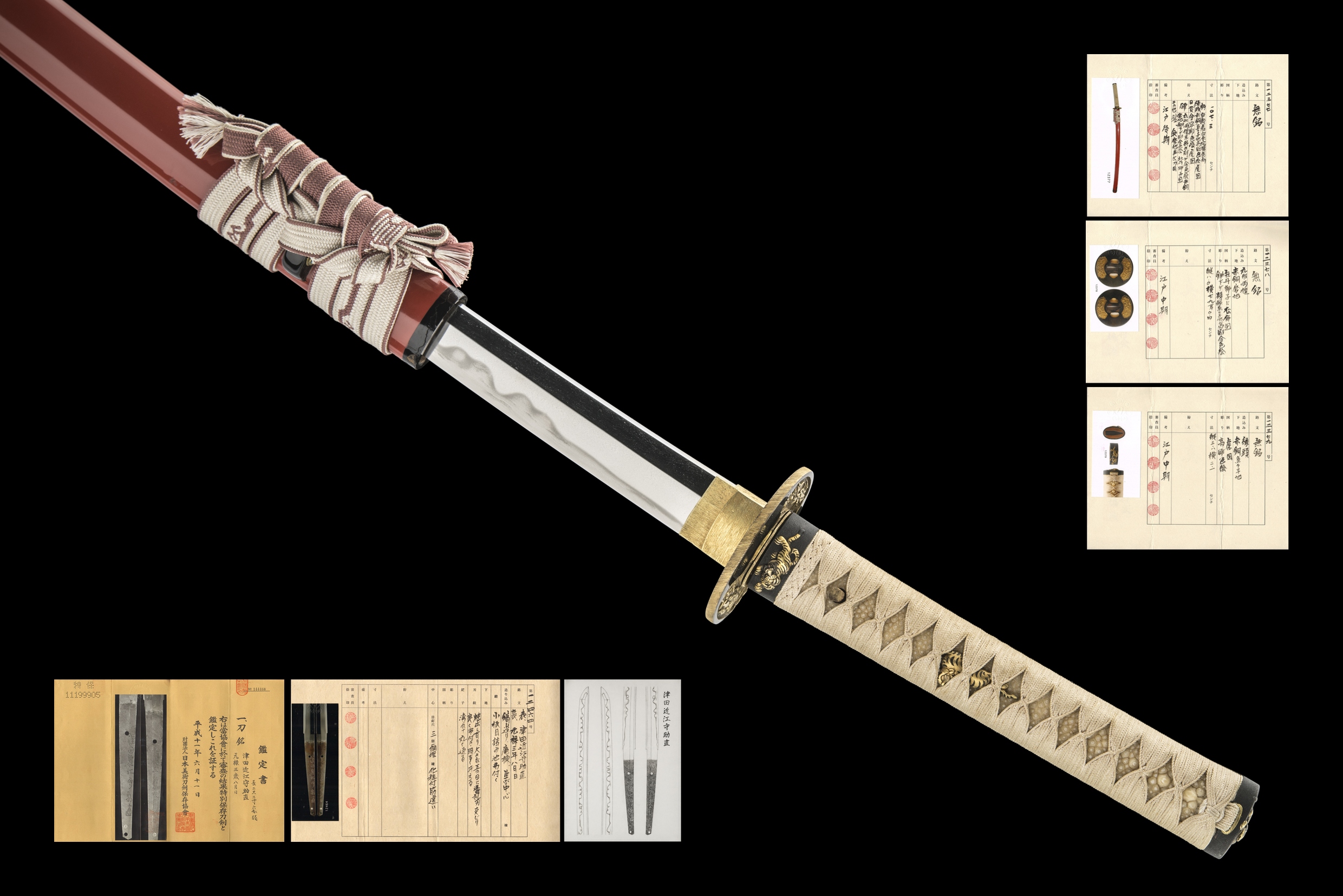
Maestro Sukenao was born in 1639 in the village of Takagi, his birth name being Tsuda Magodayû. He entered as an apprentice of grandmaster Echizen no Kami Sukehiro – one of the greatest smiths of the Shintô period – and later married Sukehiro’s daughter in 1675, becoming his most celebrated and prolific student. Sukenao lived in Osaka Soya-chô, and his works are recorded up until around Genroku Roku-nen (1693), the year he died at the age of 55. He is ranked jôjô-saku (highly superior smith) and ryô-wazamono for the exceptional cutting ability of his blades.
Dated to the eighth month of Genroku 3 (August 1690), this magnificent katana was made when Sukenao was 53 years old, just three or four years before his death. The blade showcases his signature toran-midare hamon in full maturity – great billowing waves of gunome surging along the steel, packed with bright nie and of remarkable consistency throughout. The nioguchi is crisp and even; this is undeniably the work of a master. Notably, the nakago is inscribed in the beautiful cursive script that Sukenao adopted from 1682 onwards, adding a further layer of distinction to an already exceptional piece.
The sword is accompanied by an outstanding tiger-themed Edo period koshirae – red-lacquered shunuri saya of the Late Edo period, fuchi-kashira attributed to Yokoya Eisei with superb gold tiger motifs on a nanako ground, a splendid shakudô tsuba attributed to Nara Masanaga of Edo, and tiger menuki peeking through jabara-maki silk wrapping on the handle. The ensemble is certified authentic by the NTHK-NPO. This sword holds both an NBTHK Tokubetsu Hozon certificate and the NTHK-NPO Yûshûsaku designation – the highest honour that organisation awards, confirmed by four judges.
| Item Number | UJKA427 |
| Sword Type | Katana |
| Swordsmith | Tsuda Ômi no Kami Sukenao (1st generation) |
| Swordsmith (JP) | 津田近江守助直 (初代) |
| Signature | Tsuda Ômi no Kami Sukenao |
| Date | Genroku 3, 8th month (August 1690) |
| School | Tsuda school (Osaka Shintô) |
| Province | Settsu (resident of Osaka) |
| Period | Shintô – Early Edo period (Genroku era: 1688-1704) |
| Nagasa | 71.5cm |
| Sori | 1.80cm |
| Moto-haba | 3.18cm |
| Weight | 720g |
| Nakago | Ubu (original, unaltered); sujikai-yasurime (diagonal file marks); 2 mekugi-ana |
| Jihada | Tight ko-itame-hada with plenty of ji-nie |
| Hamon | Billowing gunome mixed with tôran-ba, bright with plenty of nie |
| Boshi | Midare-komi, ko-maru with return |
| Certificates | NBTHK Tokubetsu Hozon (issued Heisei 11, June 11, 1999); NTHK-NPO Yûshûsaku (issued Reiwa 5, December 17, 2023); NTHK-NPO Kanteishô x3 (koshirae, tsuba, fuchi-kashira) |
| Fujishiro Rank | Jôjô-saku |
| Sharpness Rating | Ryô-wazamono |
| Koshirae | Shunuri saya uchigatana-koshirae (red-lacquered); Late Edo period (1780-1867) |
| Tsuba | Attributed to Nara Masanaga, Edo; unsigned; polished shakudô; peony, guardian shisa lions, pine and plum; gakubuchi carving, nanako ground, gold accents; NTHK-NPO certified |
| Fuchi-kashira | Attributed to Yokoya Eisei (1700s); tiger motif; gold on nanako ground; NTHK-NPO certified |
| Menuki | Tigers; gold; jabara-maki silk wrapping |
| Habaki | Gold-wrapped ni-ju habaki with crisp file marks |
| Catalogue | Catalogue 40 |
| Status | Sold |
| Includes | Shirasaya, Edo koshirae, fabric bags, stand, kit, printed description |