
ITEM# UJKA405 – Catalogue 38 – Sold
A Morihiro Katana (先祖拝領之)
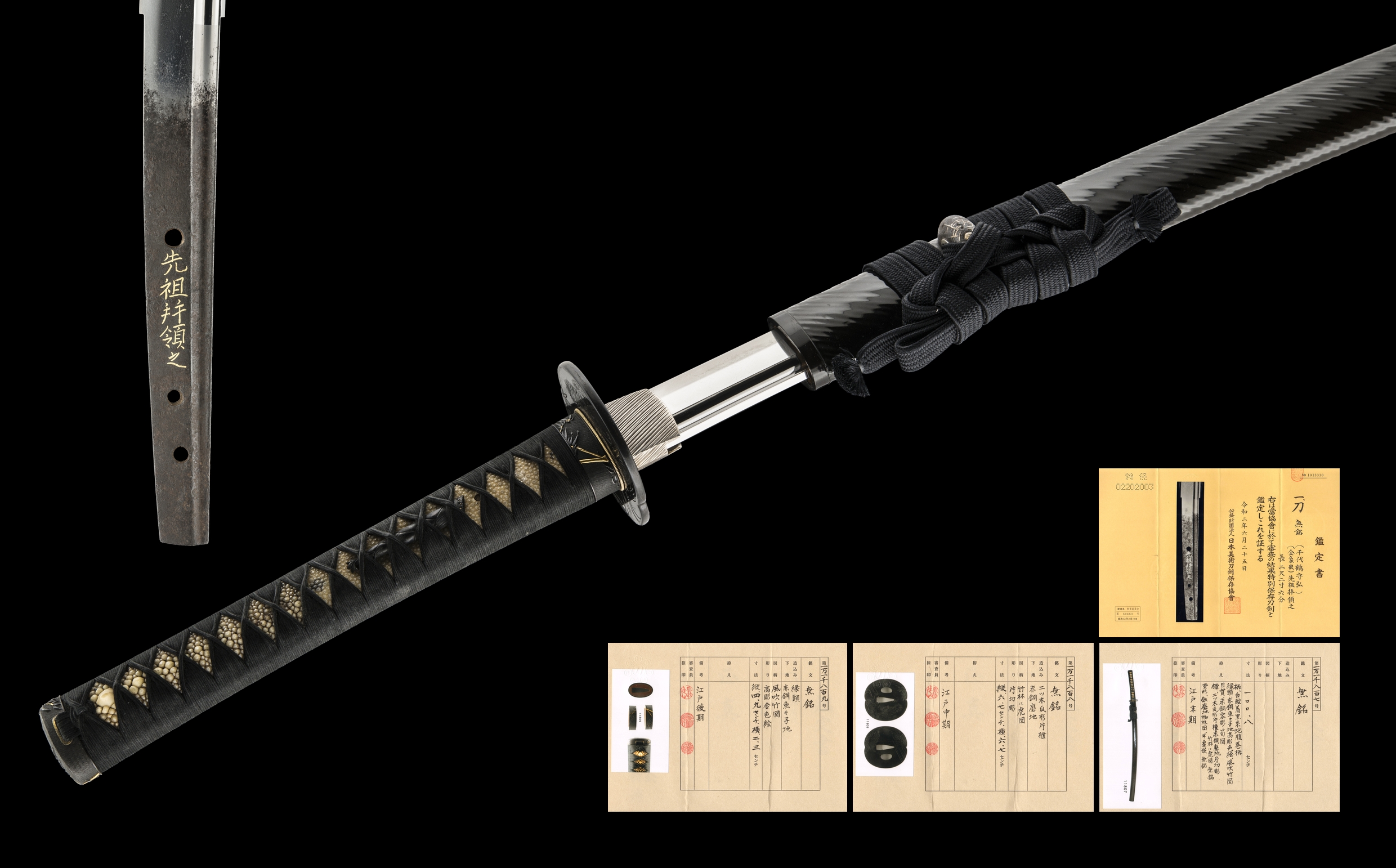
The Chiyozuru school was founded in Echizen province around 1337 by Chiyozuru Kuniyasu, who had migrated from the distinguished Rai school in search of the ideal spring water for forging. He settled in Takefu and established a tradition that would become one of the most respected provincial schools of the Muromachi period. The Morihiro name lasted through approximately four generations, and this expertly crafted katana is most likely the work of the second generation – son of Rai Kuniyasu – who was active during the Ôei era, circa 1394-1428. Ranked jô-saku by Fujishiro, Morihiro’s superior skill as a swordsmith is fully evident in this blade.
The jihada is a genuine pleasure to study: richly figured mokume-hada blends with areas of ô-hada and flowing nagare-hada, with abundant chikei throughout. The contrast between this lively grain and the darkish jigane – characteristic of Echizen province’s coastal steel tradition – is striking. The hamon is a clear, bright suguha terminating in a kaen-boshi. The ô-suriage nakago has been greatly shortened and bears a remarkable gold-inlaid inscription reading Senzo kore hairyô – “my ancestor received this sword” – a testament to the generations of custodians who prized this blade before us.
The late Edo koshirae is a thematically cohesive ensemble of considerable quality. The kizami-saya features hand-carved diagonal spirals lacquered in glossy black that cast dramatic zig-zag shadows. The polished shakudô tsuba, attributed to the Yokotani school (mid-Edo, circa 1700-1780), depicts a tiger in a bamboo grove – strength tempered by flexibility, courage balanced by humility. The fuchi-kashira, attributed to the Kikuoka school (1780-1867), continue the bamboo theme, while the menuki are formed as bamboo stalks. A spider and its web decorate the iron kurigata: patient, persistent, undeterred. The entire mounting speaks of an ancestral sword well worth preserving for the generations to come.
| Item Number | UJKA405 |
| Sword Type | Katana |
| Attribution | Attributed to Morihiro (2nd generation, ô-suriage nakago) |
| School | Chiyozuru |
| Province | Echizen |
| Period | Koto – Early Muromachi (Oei era: 1394-1428) |
| Nagasa | 68.8cm |
| Sori | 1.4cm |
| Moto-haba | 2.78cm |
| Weight | 640g |
| Nakago | O-suriage, 18.0cm, 3 mekugi-ana, gold-inlaid inscription (kinzogan): Senzo kore hairyo |
| Jihada | Mokume-hada mixed with o-hada and nagare-hada, plentiful chikei |
| Hamon | Suguha |
| Boshi | Kaen-boshi |
| Certificates | NBTHK Tokubetsu Hozon; NTHK-NPO Kanteisho (tsuba, fuchi-kashira & koshirae) |
| Fujishiro Rank | Jo-saku |
| Koshirae | Naname-kizami kuro-ro-nuri saya uchigatana-koshirae, Late Edo period (1780-1867) |
| Tsuba | Polished shakudo, tiger in bamboo grove, attributed to Yokotani school, mid-Edo (circa 1700-1780); NTHK-NPO Kanteisho |
| Fuchi-kashira | Bamboo trees swaying in the wind, attributed to Kikuoka school (1780-1867); NTHK-NPO Kanteisho |
| Menuki | Bamboo stalks |
| Habaki | Silver, diagonal file marks |
| Catalogue | Catalogue 38 |
| Status | Sold |
| Includes | Shirasaya, Edo koshirae, fabric bags, stand, kit, booklet, description |