
ITEM# UJKA344 – Catalogue 34 – Sold
A Jumyo Katana (寿命)
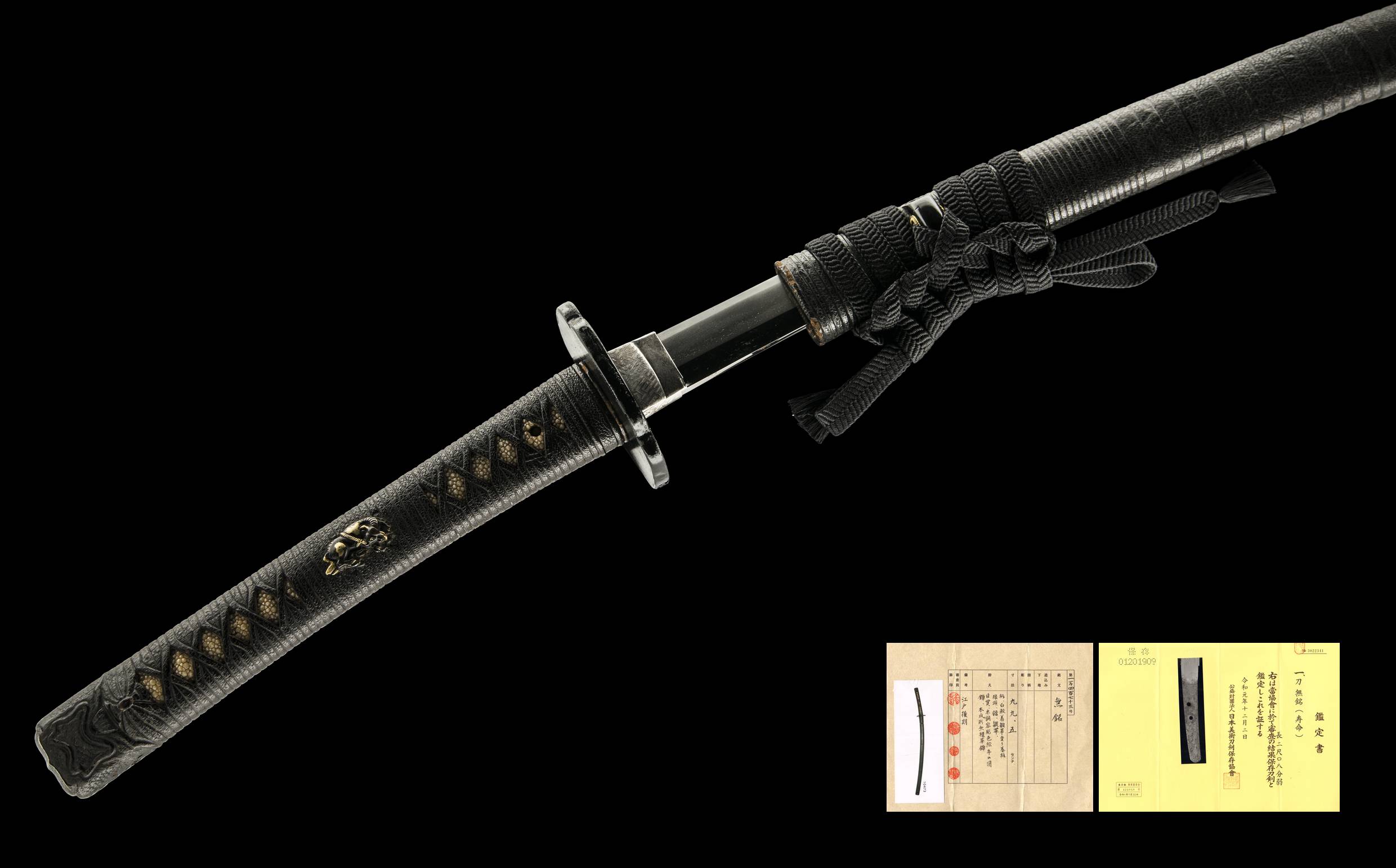
The Jumyo school lineage reaches back to the earliest days of the Mino tradition. The first generation is said to have come from Yamato (Nara province) around 1302, originally based in Shimizu village. The school name combines two characters – 寿 (kotobuki, meaning congratulations) and 命 (inochi, life) – read together as Jumyo, or Toshinaga, conveying the sense of a happy and long life. Blades from this school were considered auspicious gifts and were presented to daimyo families throughout the Edo period, when the school prospered under the patronage of the Owari Tokugawa clan.
This katana was forged during the latter part of the Muromachi period, circa the mid-1500s, as indicated by the pronounced curvature of the blade and the unmistakable Koto-quality of the steel. The nakago is unsigned (mumei) and the NBTHK’s attribution to the Jumyo school is confirmed on the Hozon certificate. The hamon is a rhythmic gunome with togari peaks – the pointed formations that run in sections along the blade and are a core characteristic of the Mino tradition, said to be inspired by the way cedar forests and mountain ranges recede into the distance. The jihada is a dense ko-itame; at 63.0 cm nagasa and 1.90 cm sori, the blade has the efficient proportions of a working katana from the warring states era.
The koshirae is a striking kuro-shibokawa-nuri uchigatana mounting – the saya and tsuka wrapped in black wrinkled leather, ribbed at intervals – a style associated with the field equipment of the late Edo samurai class, certified by the NTHK-NPO. The tsuba is a plain black leather guard of functional character, and the menuki depict a cow in gold and shakudo – a temple deity connected to good harvest and protection from illness. The habaki is silver over copper with a distinctive unique design.
| Item Number | UJKA344 |
| Sword Type | Katana |
| Attribution | Jumyo school (mumei) |
| School | Jumyo (Mino tradition) |
| Province | Mino |
| Period | Koto – Mid-Late Muromachi period (1500s) |
| Nagasa | 63.0 cm |
| Sori | 1.90 cm |
| Moto-haba | 2.74 cm |
| Weight | 550 g |
| Nakago | Mumei (unsigned); 2 mekugi-ana |
| Jihada | Ko-itame |
| Hamon | Gunome with togari |
| Certificates | NBTHK Hozon; NTHK-NPO Kanteisho (koshirae) |
| Koshirae | Koshi ichibu-kizami shita sambu-kizami saya kuro-shibokawa-nuri uchigatana-koshirae (black wrinkled leather, ribbed), Late Edo (1780-1867); NTHK-NPO Kanteisho |
| Tsuba | Leather guard (kawa-tsuba), plain black |
| Menuki | Cow deity in gold and shakudo |
| Habaki | Silver over copper with unique design |
| Catalogue | Catalogue 34 |
| Status | Sold |
| Includes | Shirasaya, koshirae, koshirae bag |