
ITEM# UJKA215 – Catalogue 26 – Sold
An Uda Kunimune / Yamato Senjuin Kodachi (宇多国宗 / 大和千手院)
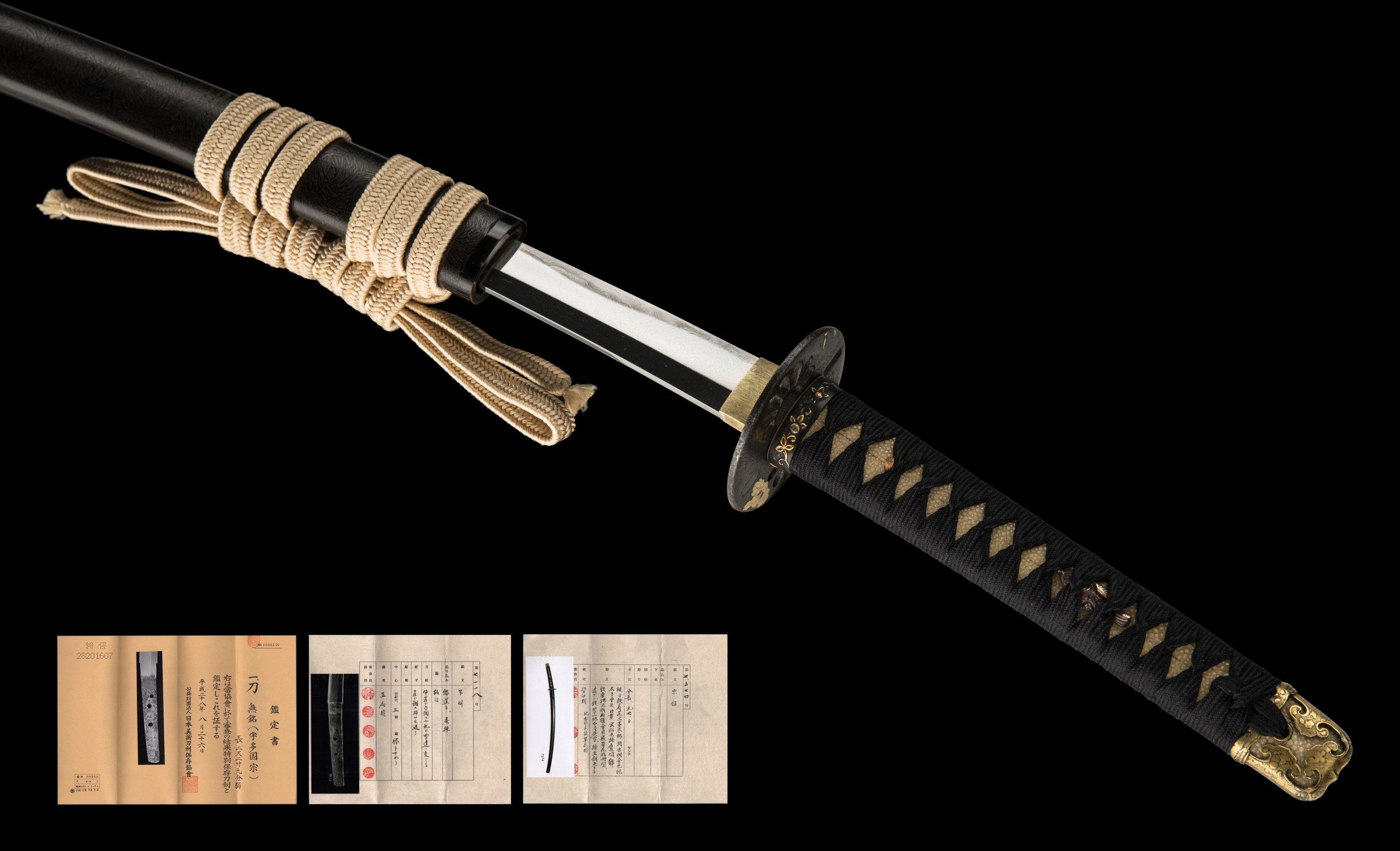
Few swords carry their age as gracefully as this late Kamakura kodachi. At 69.4cm with a generous 2.3cm curve retained in its original unshortened state, the blade speaks directly to the aesthetic ideals of the late 13th century – slender, deeply curved, built for a mounted warrior rather than a foot soldier. The ubu nakago is deeply oxidised after over 700 years, and although unsigned, it likely conceals a signature beneath the natural patination. The NTHK-NPO society attributes the blade to the Yamato Senjuin School, dating it to the Shou era (1288-1293), while the NBTHK attributes it to Uda Kunimune of the Ko-Uda School of Etchu province – historically connected traditions that share the same Yamato roots.
The steel itself is a pleasure to study. The jihada is a rich itame and mokume mix with a woody, textured quality characteristic of the Uda tradition. The hamon is a confident chu-suguha with ko-midare, built on a vigorous nie foundation – crystals visible and bright. Kinsuji, sunagashi, and chikei are all present in abundance. At the tip, the boshi is a sweeping hakikake, executed with the assured hand of a skilled craftsman. This is a blade that rewards careful examination in good light.
The accompanying koshirae is a genuinely distinguished package. Certified by NTHK-NPO to the 1700s middle Edo period, it is mounted with elegant tachi fittings including a polished iron Tanabata-themed tsuba – chrysanthemum piercings flanking the nakago-ana with splashes of gold-inlaid leaves – a fuchi decorated with gold berries and foliage on a dark ground, and a pair of gilt hawk menuki, symbols of bravery and restrained power. The Hikiryou kamon (a dragon expressed through horizontal lines within a circle) is struck on the kashira, a device associated with notable daimyo families including the Ashikaga and Nitta clans. The overall ensemble is coherent, refined, and historically resonant.
| Item Number | UJKA215 |
| Sword Type | Kodachi |
| Attribution | Uda Kunimune (NBTHK); Yamato Senjuin School (NTHK-NPO) (mumei) |
| School | Ko-Uda School / Yamato Senjuin School |
| Province | Etchu / Yamato |
| Period | Kotô – Late Kamakura (Shou era: 1288-1293) |
| Nagasa | 69.4cm (ubu) |
| Sori | 2.3cm |
| Moto-haba | 2.8cm |
| Weight | 520g |
| Nakago | Ubu, 15.4cm, 3 mekugi-ana, unsigned |
| Jihada | Itame and mokume (burl grain pattern) |
| Hamon | Chu-suguha with ko-midare; nie-based; kinsuji, sunagashi, and chikei |
| Boshi | Hakikake (sweeping) |
| Certificates | NBTHK Tokubetsu Hozon; NTHK-NPO Kanteisho (sword and koshirae) |
| Koshirae | Tachi koshirae; NTHK-NPO Kanteisho certified, mid-Edo period (1700s); black lacquer saya with cream silk sageo; black silk tsuka-ito over same |
| Tsuba | Polished iron, round; chrysanthemum petal piercings forming kozuka and kogai hitsu-ana; gold-inlaid leaf and crescent motifs; Tanabata theme |
| Fuchi-kashira | Shakudo; gold-inlaid berries and foliage (fuchi); Hikiryou kamon (kashira) – dragon motif associated with Ashikaga and Nitta clans |
| Menuki | Gilt hawks |
| Habaki | Tate yasuri, brass |
| Catalogue | Catalogue 26 |
| Status | Sold |
| Includes | Shirasaya, koshirae, carry bags, sword stand, kit, DVD, export services |