
ITEM# UJKA210 – Catalogue 25 – Sold
A Kodai Kanemoto Katana (兼元)
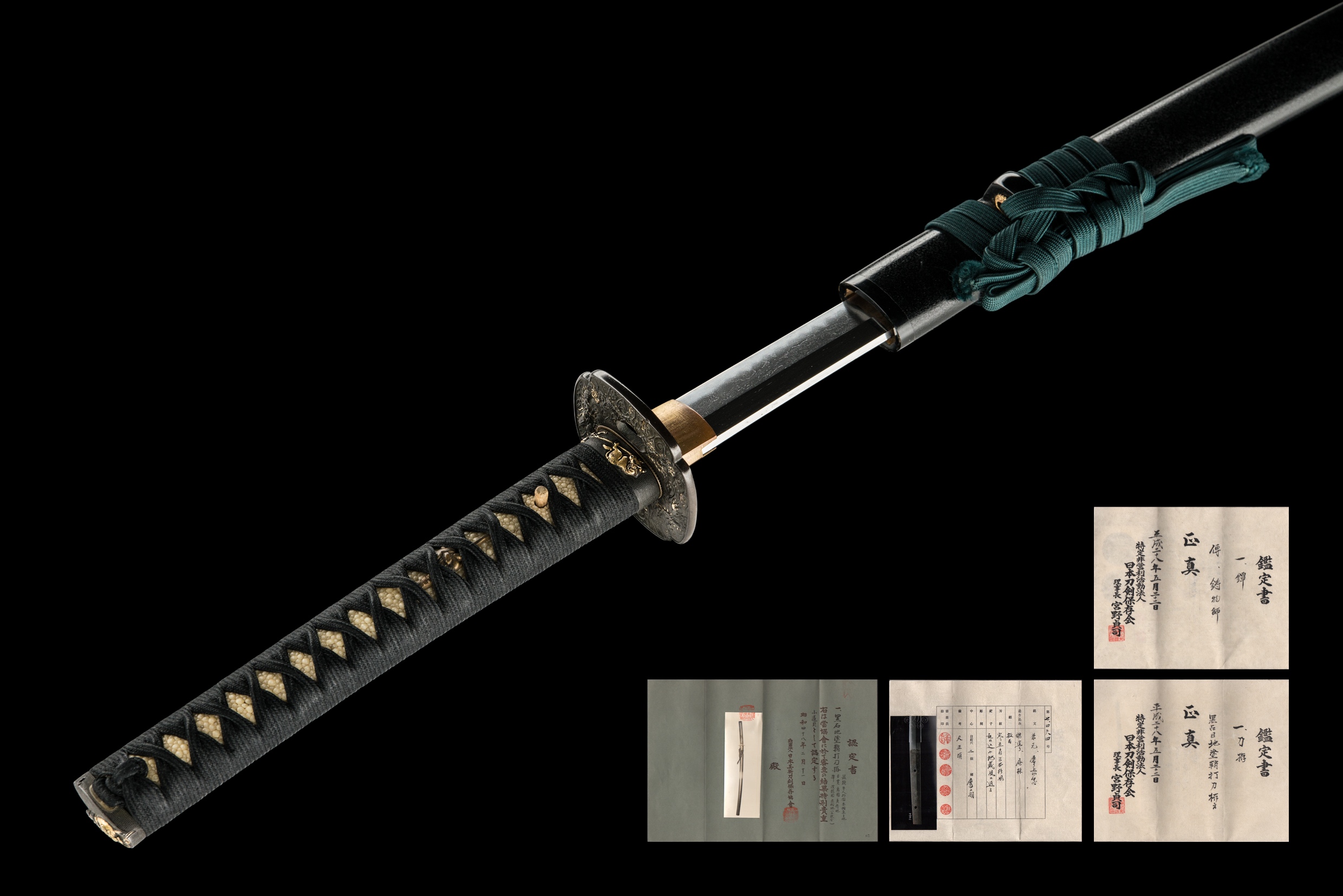
The Kanemoto school is the defining name of the Mino tradition, much as the Sukesada family defines the Bizen tradition. The lineage begins in earnest with second generation Magoroku Kanemoto, an ō-wazamono smith whose blades were celebrated above all for their cutting ability. Magoroku also pioneered the sambonsugi hamon – a temper line that rises and peaks in clusters of three, resembling cedar trees – a signature style that each generation carried forward and made their own.
This signed 69.9cm katana has been attributed to fourth generation Kanemoto, working circa the Tenshō era (1573–1592) of the Azuchi-Momoyama period. True to Mino form, the blade shows a vigorous tōgari gunome sambonsugi hamon and an ō-hada jihada with noticeable masame in the shinogi-ji. The sword has been shortened – it was originally around 77cm – but the signature survives on the suriage nakago, and the sword retains its unmistakable warrior character.
The Edo-period koshirae is an eclectic and powerful ensemble: a Ko-Kinko shakudō mokko tsuba with a dragon amid surging waves in gold inlay, fuchi-kashira of shakudō nanko depicting a farmer wrestling his ox (fuchi) and a wise man subduing the same beast with quiet spiritual force (kashira), and oni-ni-kanabo menuki – the invincible demon with iron club. The koshirae holds NBTHK Tokubetsu Kichō certification. The shirasaya bears an inscription attributing the blade to second generation Kanemoto Magoroku, while a separate owner’s inscription dated March 1959 records the sword as a great work and instructs the reader not to pass it to others.
| Item Number | UJKA210 |
| Sword Type | Katana |
| Swordsmith | Kodai Kanemoto (4th generation) |
| Swordsmith (JP) | 兼元 |
| Signature | Kanemoto |
| School | Kanemoto school, Mino tradition |
| Province | Mino (Gifu prefecture) |
| Period | Momoyama · Tenshō era (1573–1592) |
| Nagasa | 69.9cm |
| Sori | 1.2cm |
| Moto-haba | 2.8cm |
| Weight | 575g |
| Nakago | Suriage (shortened, signature partially visible) |
| Jihada | Ō-hada with traces of masame-hada |
| Hamon | Tōgari gunome sambonsugi |
| Certificates | NTHK-NPO Kanteishō (sword); NBTHK Tokubetsu Kichō (koshirae); NTHK-NPO Kanteishō (tsuba and koshirae) |
| Fujishiro Rank | Chūjō-saku |
| Koshirae | Edo-period koshirae (NBTHK Tokubetsu Kichō) |
| Tsuba | Ko-Kinko mokko-gata, shakudō, dragon amid surging waves in gold inlay – NTHK-NPO Kanteishō |
| Fuchi-kashira | Shakudō nanko; fuchi: farmer controlling ox with rope; kashira: wise man subduing ox |
| Menuki | Oni with kanabo (iron club) |
| Habaki | Muji-habaki (copper) |
| Catalogue | Catalogue 25 |
| Status | Sold |
| Includes | Edo-period koshirae, shirasaya, carry bags, sword stand, maintenance kit, DVD, booklet, printed description, export permit from Japan |