
Resource Article – Written by Pablo Kuntz, Founder of Unique Japan
Parts of a Japanese Sword (刀の各部名称)
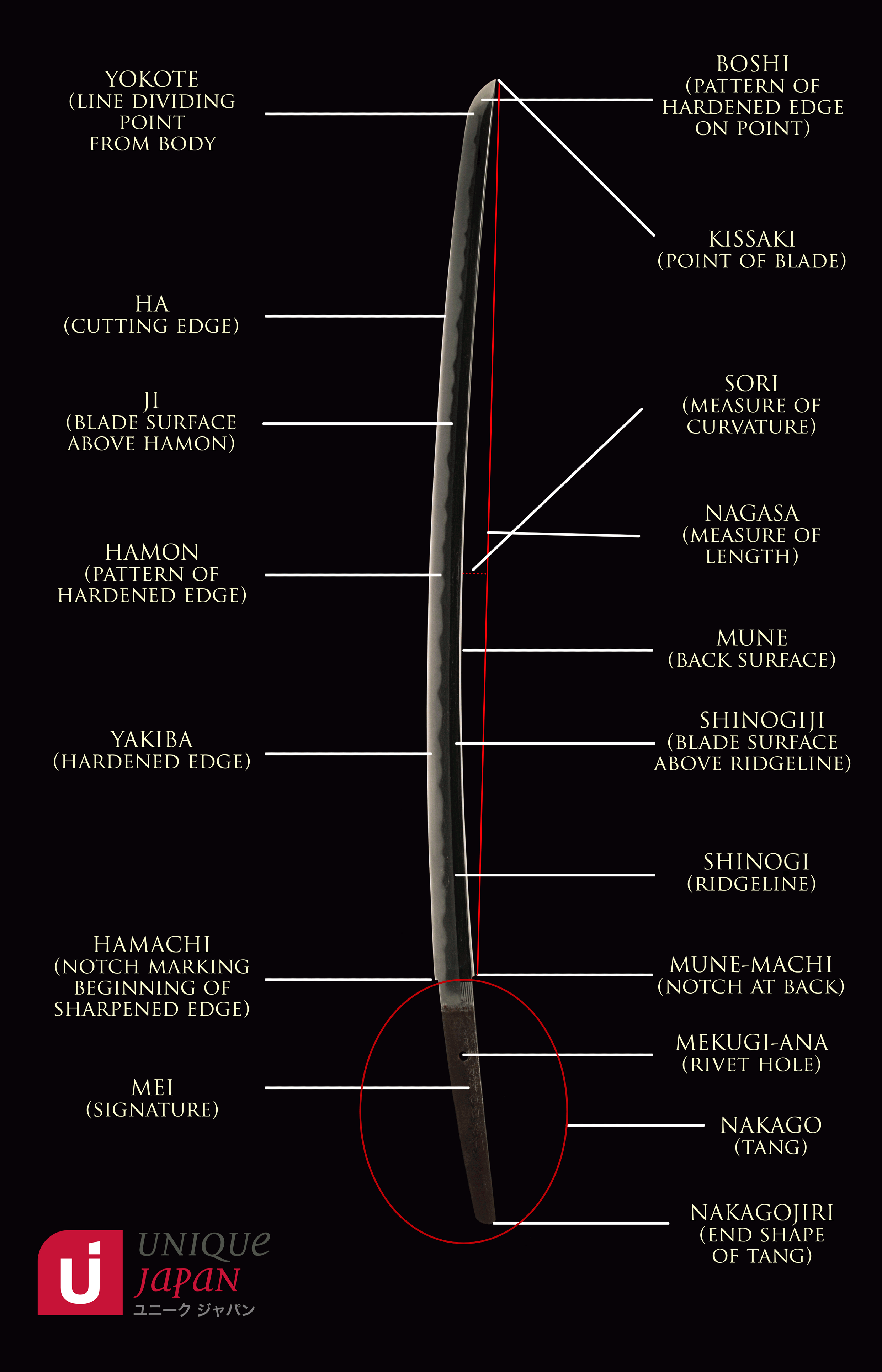
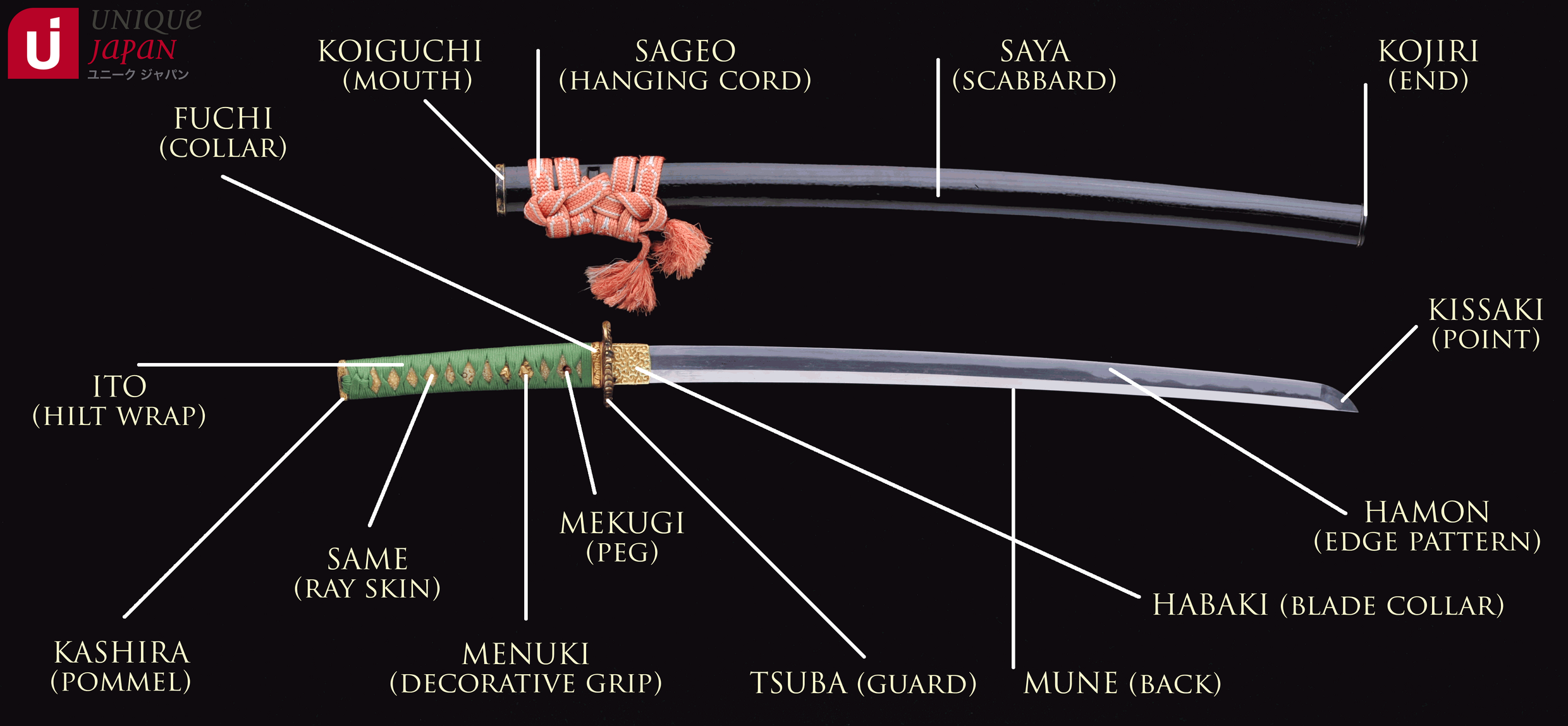
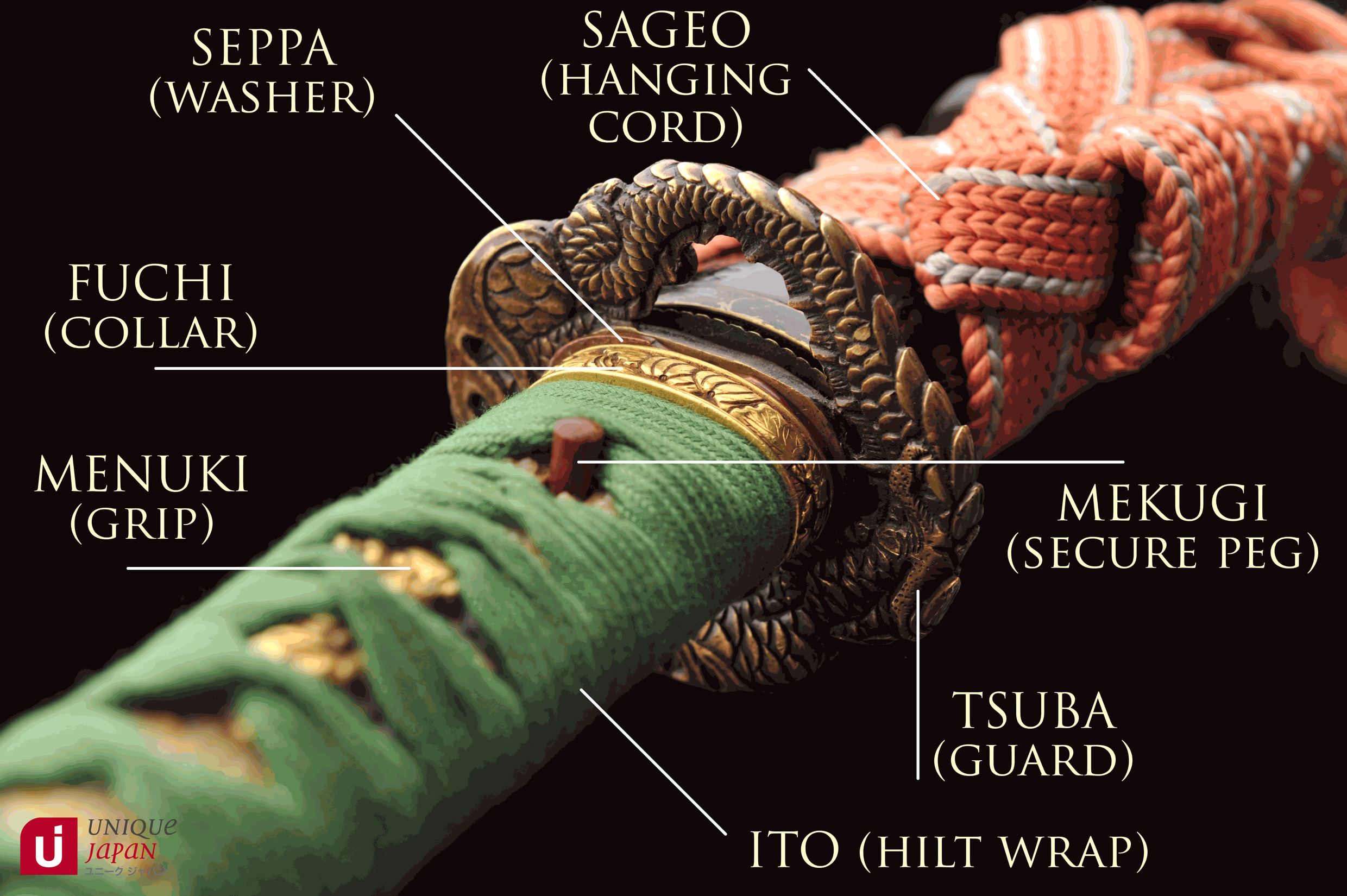
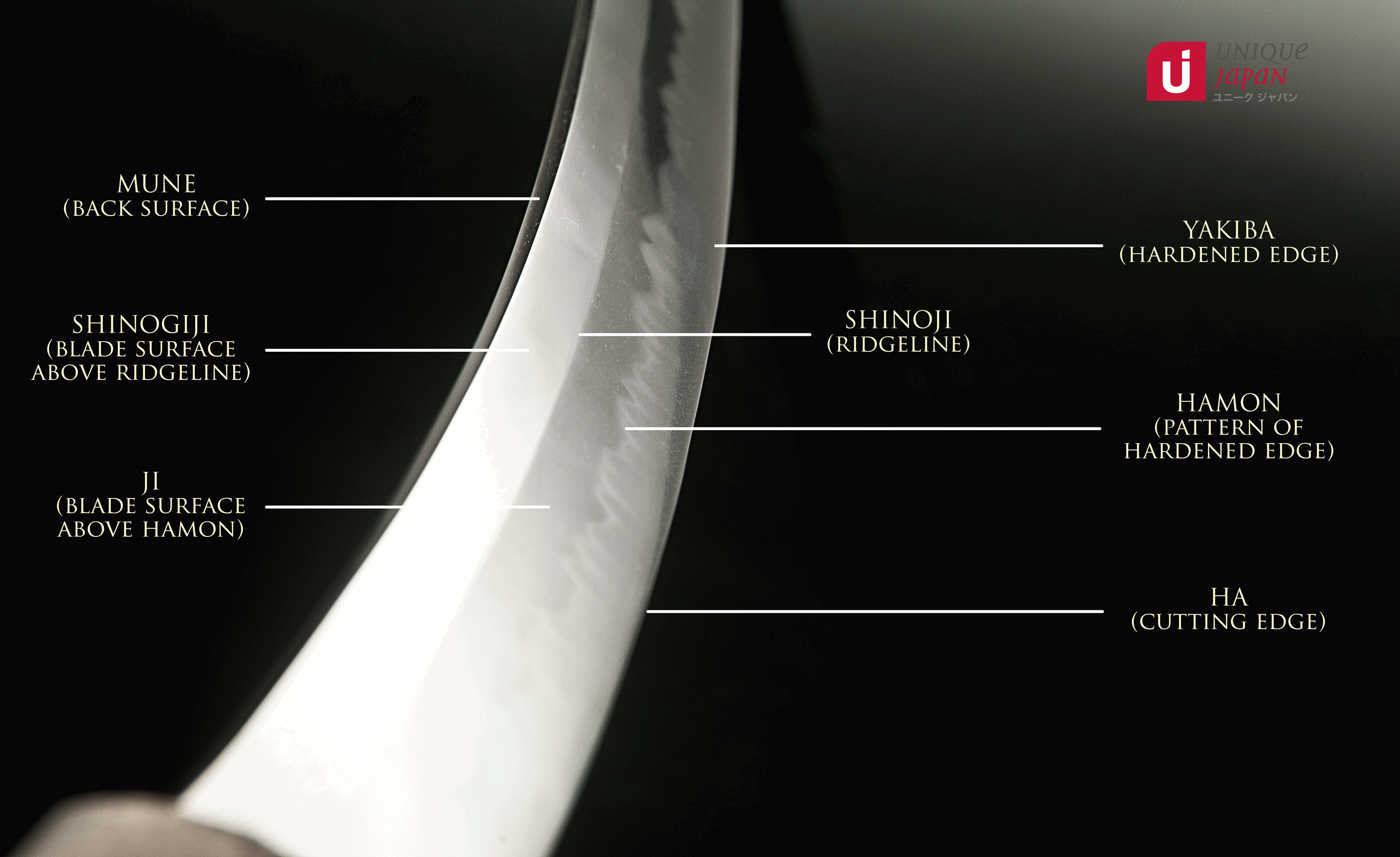
One of the first things I encourage new collectors to do is learn the names of a sword’s individual parts. It is not as daunting as it looks, and once the terminology begins to click, reading a sword description – or having a conversation with a dealer or fellow collector – becomes a completely different experience. You start to see the sword rather than just look at it.
The diagrams below cover the key parts of the blade itself and the full koshirae mounting. A completed Japanese sword is the work of many different craftsmen, each specialising in a single component – the swordsmith produces the blade, but the tsuba, fuchi-kashira, menuki, tsuka and saya are all the work of separate artisans. Understanding what each component is called, and what it does, gives you a deeper appreciation of what goes into a finished sword.
| Further Reading | |
| 7 Points to Consider When Choosing Your Japanese Sword | A practical guide covering sugata, hamon, jihada, nakago, koshirae and certification |
| 7 Reasons Why I Love Japanese Swords | A personal reflection by Pablo Kuntz after twenty years with nihontô |
| 5 Steps to Owning a Japanese Sword | How the purchase and export process works from start to finish |
| Available Swords | Current inventory with full PDF descriptions and photography |