
Resource Article – Written by Pablo Kuntz, Founder of Unique Japan
Fujishiro Rankings for Japanese Swordsmiths (藤代ランキング)
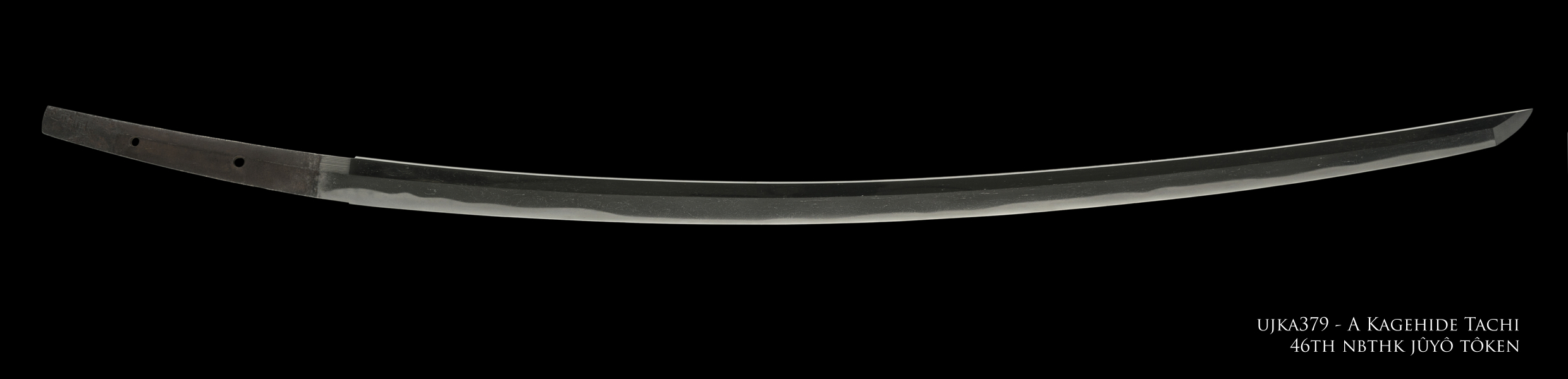
If you spend any time reading descriptions of Japanese swords – on our site or anywhere else – you will quickly encounter references to Fujishiro rankings. A smith might be described as jô-saku, saijô-saku, or chûjo-saku, etc. Understanding what these terms actually mean makes a significant difference to how you read a sword description and assess a blade’s significance.
This article explains the system clearly. It is not complicated once you understand the underlying logic – but that logic is often left out, which is where the confusion begins.
| Quick Navigation | |
| Background | Who Fujishiro was and what the Nihon Tôkô Jiten is |
| The Five Ranks | Chû-saku through Saijô-saku explained |
| The Contextual Principle | Why the same rank means different things for different smiths |
| How Rare is Saijô-saku? | The numbers that put it in perspective |
| Wazamono – Sharpness Rankings | A separate system covering cutting ability |
| Fujishiro vs. NBTHK | Two different things – not to be confused |
| Tôkô Taikan | The companion value system by Dr. Tokuno |
Background: The Nihon Tôkô Jiten
The Fujishiro ranking system comes from a two-volume reference work called the Nihon Tôkô Jiten – the “Japanese Swordsmith Dictionary.” The original was written in 1935 by Fujishiro Yoshio, a sword dealer who had spent decades collecting oshigata (ink rubbings of sword tangs) and building a comprehensive record of swordsmiths, their signatures, biographical notes, and – crucially – their relative skill. After Yoshio’s death, his younger brother Fujishiro Matsuo – who became a Living National Treasure sword polisher – revised and updated the work.
The Nihon Tôkô Jiten covers roughly 1,500 swordsmiths across the kôtô, shintô and shinshintô periods. An important point: Fujishiro did not rate any smith who was still living at the time of writing in 1935. So certain great smiths of that era – Gassan Sadakatsu being a notable example – were listed but left unrated, and their rankings have been assigned by other authorities since.
The reference text is in Japanese, but an excellent English translation by Harry Watson has been used by collectors and dealers in the West for decades. In our sword descriptions at Unique Japan, when we cite a Fujishiro rank, it comes from this source unless otherwise stated.
The Five Ranks
Fujishiro uses five tiers to rank a swordsmith’s skill. An important thing to note upfront: Fujishiro only lists smiths he considered worthy of recording – meaning the rating scale starts at “average” and goes up. Any smith with a Fujishiro rating is already considered capable of producing good work. There is no “below average” in this system – those smiths simply do not appear.
| Saijô-saku (最上作) |
Grandmaster swordsmith The very highest distinction. Smiths of extraordinary and transcendent skill. Think Masamune, Rai Kunitoshi, Hankei, Hizen Tadayoshi, Kiyomaro. Of roughly 1,500 smiths rated by Fujishiro, only 65 achieved this level. |
| Jôjô-saku (上々作) |
Highly superior swordsmith Outstanding smiths of the highest calibre. A Jôjô-saku rating is a mark of exceptional distinction and describes the majority of the finest swords in serious collections. Koyama Munetsugu, for example, carries a Jôjô-saku rating. |
| Jô-saku (上作) |
Superior swordsmith Very accomplished smiths whose work consistently demonstrates mastery of their tradition. A significant and desirable rating that covers a great many fine and collectible swords. |
| Chû-jô-saku (中上作) |
Above average swordsmith Skilled smiths producing quality work above the general standard of their era and school. Solid and collectible, particularly when the sword itself is in fine condition. |
| Chû-saku (中作) |
Average swordsmith The entry level of Fujishiro’s system. A Chû-saku rating still means the smith produced competent, genuine work worthy of documentation. As noted above, appearing in Fujishiro at all is a positive sign. |
The Contextual Principle – The Most Important Thing to Understand
This is the part that most newcomers to nihontô miss, and it matters considerably.
Fujishiro’s ratings are contextual. He is not rating a smith on an absolute universal scale – he is rating each smith relative to his own school, tradition and time period. A Jô-saku smith of the Kamakura period from one of the great gokaden traditions is a very different proposition from a Jô-saku smith from the early Edo period, especially one from a not so famous school. The rating tells you where the smith stands within his own point in time and place – not where he stands against every other swordsmith in Japanese history.
Furthermore, Fujishiro himself was trained in the Hon’ami tradition, which historically valued kôtô work. His ratings reflect that sensibility. Kôtô period saijô-saku smiths are generally held in higher regard than shintô period saijô-saku smiths. And this is consistent with how the broader collecting world values these periods.
Having said all of that, do not get too hung up on Fujishiro rankings. I personally believe he got certain smiths wrong – particularly some rated chû-jô-saku who in my opinion deserve jô-saku. Bitchû no Kami Tachibana Yasuhiro is one that immediately comes to mind. Fujishiro and his brother did not examine every sword by every smith they listed. They worked from a limited pool, took an average, and moved on. They may well have missed a magnificent example by the very smith they rated as chû-saku.
The bottom line: if a sword speaks to you, do not let Fujishiro talk you out of it.
How Rare is Saijô-saku?
To put the top tier in perspective: of the roughly 1,500 smiths Fujishiro rated across more than a thousand years of production, only 65 achieved saijô-saku. That is about 4% of an already curated and selective list.
Of those 65 grandmaster smiths, 56 are kôtô period – with the vast majority active during the Kamakura period (1185-1333), which is broadly considered the golden age of Japanese swordsmithing. Nine saijô-saku smiths come from the shintô and shinshintô eras combined.
When you are handling a sword by a saijô-saku smith, you are in very distinguished company.
Wazamono – The Sharpness Ranking System
Separate from the Fujishiro quality ranking, there is a parallel system that rates swordsmiths specifically on the cutting ability of their blades. This is the wazamono system, which goes back to the revised 1815 edition of the Kaihô Kenjaku and reflects the accumulated experience of the Yamada family – the most famous of Japan’s tameshigiri (sword testing) experts over many generations.
The four wazamono levels, from greatest to least, are:
| Saijô-ô-wazamono (最上大業物) |
Supreme sharpness. The very finest cutting swords. A small and elite group. |
| Ô-wazamono (大業物) |
Great sharpness. Exceptional cutting ability – a highly desirable designation that adds significant collectibility and value. |
| Ryô-wazamono (良業物) |
Good sharpness. Above average cutting performance. |
| Wazamono (業物) |
Sharp swords. A confirmed level of cutting ability – still a positive distinction. |
The wazamono ranking and the Fujishiro quality ranking are entirely independent of each other. A sword can rank highly on one and modestly on the other – or highly on both. Some of the most collectible swords carry both a strong Fujishiro rank and a wazamono designation, which is why we always note both where they apply in our descriptions. In our spec tables you will typically see the Fujishiro rank listed as “Fujishiro Rank” and the sharpness rating listed separately as “Sharpness Rating.”
Fujishiro Rankings vs. NBTHK Certification – Not the Same Thing
This is a point worth emphasising clearly: Fujishiro ranks and NBTHK certificates are two completely separate systems and should not be conflated.
Fujishiro ranks the swordsmith – the person, the body of work, the tradition. It is a general assessment of skill applied to the maker.
NBTHK certificates assess a specific sword – this particular blade, in this condition, with this attribution. A sword can have a saijô-saku smith on the tang and still fail to achieve Hozon if the blade is in poor condition. Conversely, a sword by a chû-jô-saku smith can achieve Jûyô Tôken if it is a masterwork within that smith’s output.
In general, as a rough guide: the NBTHK has noted that a smith typically needs to be of at least jô-saku level to be a realistic candidate for Jûyô Tôken – though there are exceptions, and a magnificent blade by a chû-jô-saku smith has been known to pass. But this is a guideline only and should not be treated as a rule.
Think of the Fujishiro rank as the reputation of the theatre, and the NBTHK certificate as the review of a particular performance. A great theatre can have an off night, and a lesser known theatre can occasionally produce something extraordinary.
Tôkô Taikan – The Value System by Dr. Tokuno
Alongside the Fujishiro quality ranking you will often see another number in our sword descriptions and spec tables: a man-yen value from the Tôkô Taikan, a reference work by the late Dr. Tokuno. Where Fujishiro uses a qualitative approach to rate smiths, Dr. Tokuno used a quantitative one – assigning each smith a value in man-yen (increments of 10,000 yen) representing the theoretical worth of a perfect example of that smith’s work.
A “perfect” sword in this context means one that is ubu (unaltered original tang), signed, in good polish, and made at the height of the smith’s career. Alterations such as shortening, poor condition, or lack of signature reduce the value proportionally.
It is not a precise financial instrument and should not be taken as a literal price guide – the market has moved considerably since Dr. Tokuno’s time. But used alongside the Fujishiro rank, it gives a useful additional perspective on how a smith was regarded by Japanese scholars. A smith rated at 1,000 man-yen by Tokuno is in very different company from one rated at 100 man-yen, even if both carry a jô-saku from Fujishiro.
| Further Reading | |
| NBTHK Certification Rankings | Hozon, Tokubetsu Hozon, Jûyô Tôken and Tokubetsu Jûyô Tôken explained |
| NTHK-NPO Certification Rankings | The companion organisation and their certification system |
| 7 Points to Consider When Choosing Your Japanese Sword | A practical guide to all key factors in sword selection |
| Available Swords | Current inventory – Fujishiro and Wazamono ratings listed where applicable |