
ITEM# UJTA068 – Sold
A Toshinaga Tantô (六十九翁寿長)
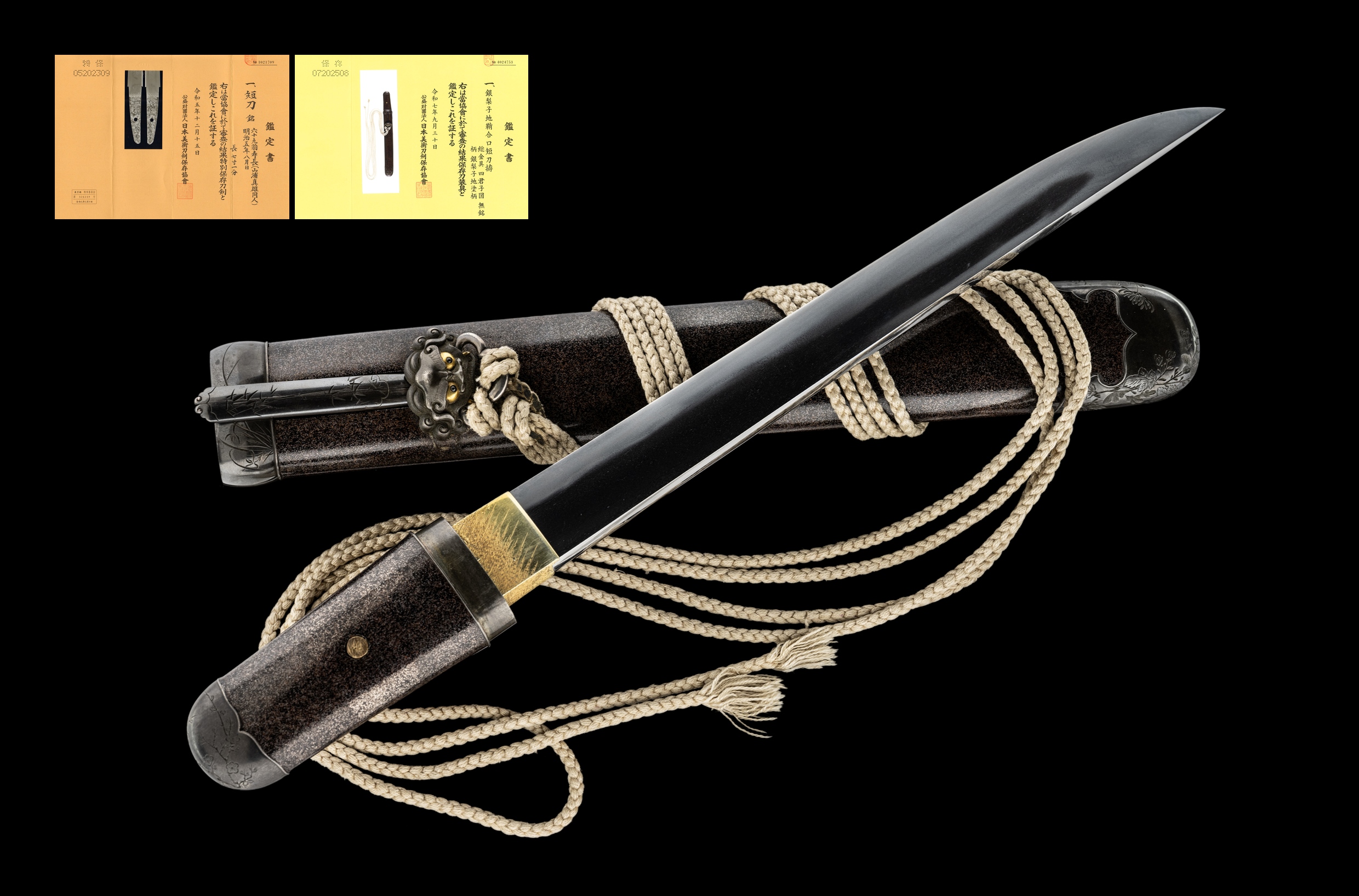
Toshinaga, the final name taken by the celebrated Yamaura Saneo, was a jôjô-saku swordsmith of the shinshintô period and elder brother of the grandmaster swordsmith Kiyomaro. This exceptional tantô, dated August 1872 in his sixty ninth year, is one of his last works, forged at the very twilight of the samurai age. The jihada is a tightly grained ko-itame with pronounced nagare, paired with a wildly electric gunome-notare-midare hamon in the Sôshû tradition – a cocktail of brushed sunagashi, slices of kinsuji, a dramatic hakikake bôshi and a thunderstorm of inazuma. Nie-deki throughout, the crystalline activity is exceptional for a blade of this late date.
Forged barely four years after the Meiji Restoration, in a year that saw the domain system dissolved and the samurai class stripped of its legal standing, this tantô stands as a quiet act of defiance. Saneo had already passed headship of the family to his son Kanetora the previous year and completed his memoir, yet before the ink had dried he produced this very blade – devoting himself wholly to the forge in an age that was fast losing its need for swords. The Sword Abolishment Edict lay four years in the future, but its approach was already unmistakable. This is a blade born in the last glimmer of light before a centuries-old culture drew quietly toward its close.
Its stunning koshirae, certainly original to the tantô, is finished in silver nashiji-nuri lacquer in the aikuchi style, unified throughout with matching soroi-kanagu fittings depicting the Four Gentlemen – orchid, bamboo, chrysanthemum and plum. Of particular note is the nomikomi construction, where the tsuka slots inside the mouth of the saya rather than sitting flush, a detail thought to reflect the higher formality of the piece, together with a remarkable shishi kurikata in katachibori with gilded eyes. Two brothers, one forge, a shared devotion to the Japanese sword. This is a blade bursting with activity, a koshirae of quiet luxury, and a story that could not be more compelling.
| Item Number | UJTA068 |
| Sword Type | Tantô |
| Swordsmith | Toshinaga (first generation) |
| Swordsmith (JP) | 六十九翁寿長 |
| Signature | Rokujûkyû-sai Toshinaga (Yamaura Saneo dôjin) |
| Date | Meiji 5, 8th month (August 1872) |
| Period | Shinshintô – Meiji period (Meiji era: 1872) |
| Nagasa | 21.5cm (ubu) |
| Sori | 0cm |
| Moto-haba | 2.19cm |
| Weight | 145g |
| Nakago | 8.86cm, ubu, sujikai-yasurime, 1 mekugi-ana |
| Jihada | Expertly forged ko-itame with glittering ji-nie, pronounced nagare and plenty of chikei |
| Hamon | Wildly electric gunome-notare-midare in the Sôshû tradition, nie-deki, with sunagashi, kinsuji and inazuma |
| Boshi | Hakikake, turning back widely in nie-deki |
| Certificates | NBTHK Tokubetsu Hozon (sword) · NBTHK Hozon (koshirae) |
| Fujishiro Rank | Jôjô-saku (ranked as a highly superior swordsmith) |
| Koshirae | Aikuchi-tantô-koshirae in silver nashiji-nuri lacquer, nomikomi construction, Meiji period |
| Fuchi-kashira | Silver soroi-kanagu, Four Gentlemen motif – orchid on fuchi, plum on kashira |
| Tsuka | Silver nashiji-nuri lacquer, nomikomi style |
| Habaki | Gold habaki with copper ground |
| Status | Sold |
| Includes | Shirasaya, Meiji period koshirae, fabric bags, kit, printed description |
The PDF contains full photography, detailed blade analysis, and all certification documentation.