
Resource Article – Written by Pablo Kuntz, Founder of Unique Japan
7 Reasons Why I Love Japanese Swords
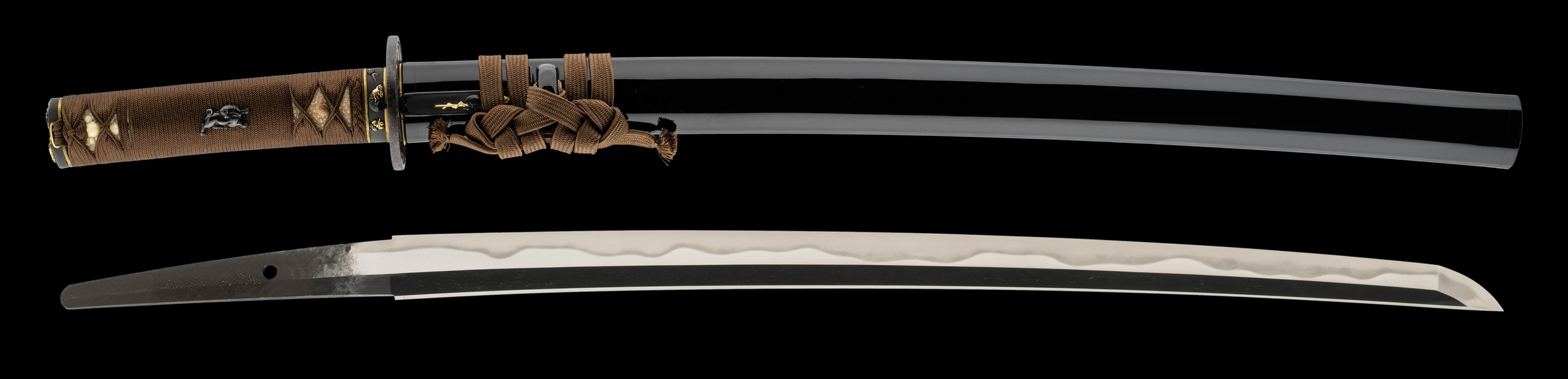
I get this question a lot. From family, from friends, from clients: “WHY do you love Japanese swords so much?”
In the early days I would reply in a slightly bewildered way: “I don’t know, I just do.” And then I would launch into a lengthy explanation about their beauty and history, trying hard to articulate that particular feeling I get every time I hold one in my hands. It was never very straightforward.
It has taken me years to write this article properly. But Japanese swords (nihontô) have changed my life in ways I am still discovering, and I know there are many people out there who connect with these objects in the same way I do. So here, finally, is my honest attempt to explain why.
These seven reasons are not in any order of importance, and they are by no means a complete list. They all interact with each other in ways that are difficult to fully separate.
| Quick Navigation | |
| Reason 1 | All That History |
| Reason 2 | Memories of Japan |
| Reason 3 | Life is Precious |
| Reason 4 | Simplicity is What Matters |
| Reason 5 | The Importance of Teamwork |
| Reason 6 | Surprisingly Accessible |
| Reason 7 | Power and Responsibility |
Reason 1: All That History
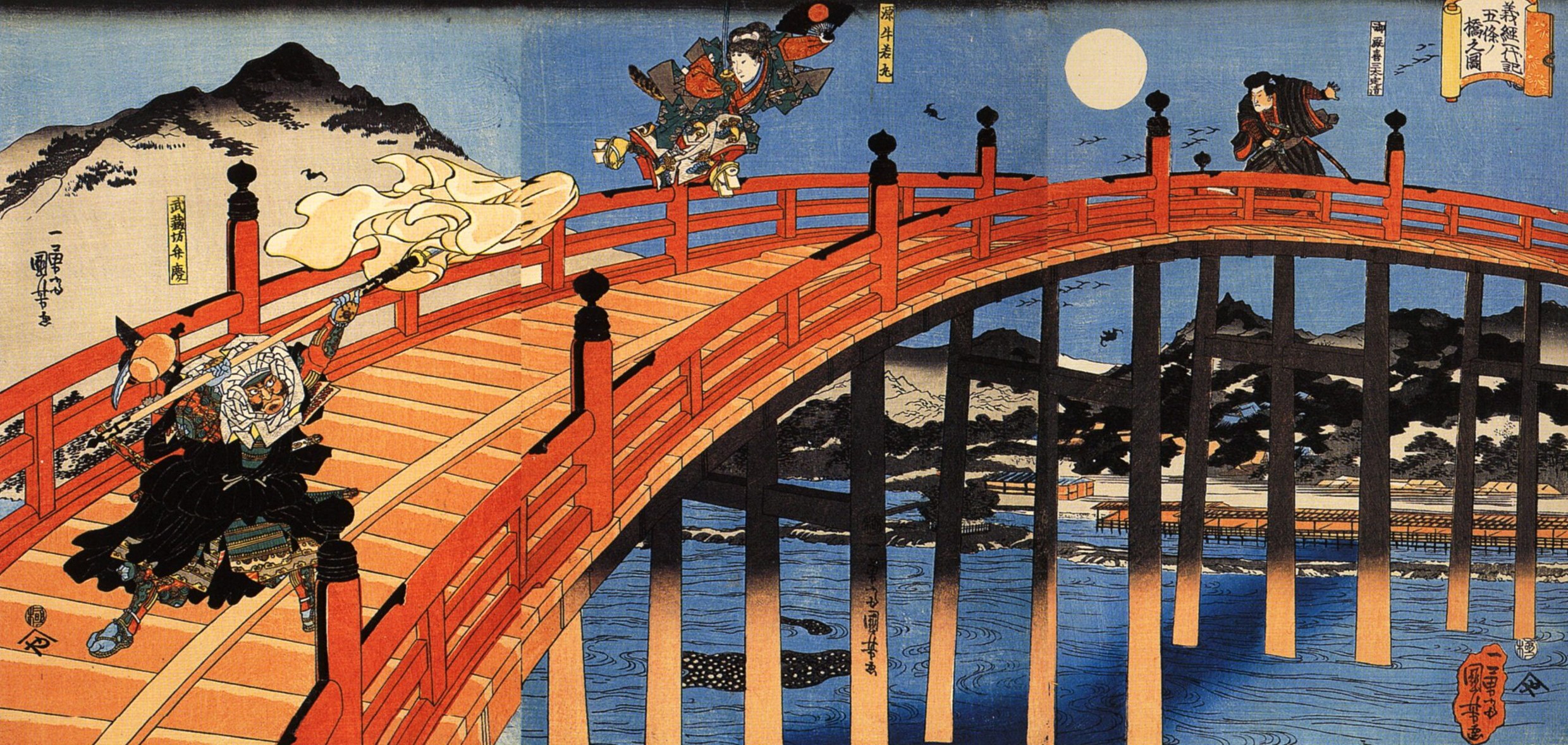
The history grabs me every time. I mean, how could it not?
The majority of the Japanese swords in existence today are genuine antiques – several hundred years old, some much older. The sword I am holding right now in my mind’s eye was forged while medieval battles were still being fought on horseback. The steel that makes up its jihada was folded and worked by human hands at a time when the world looked entirely different. And yet here it is, in my hands, in perfect working order.
My mind drifts to distant places. What was happening in the world when this sword was made? Who carried it, and through what? If it could talk, what would it say?
What I find remarkable is how well documented Japanese swords and their makers are. Through the reference books – most in Japanese, though English translations are growing – it is very often possible to build a complete story: where the smith worked, his ranking, whom he studied under, the symbolism of the artwork on the fittings, and sometimes even the families that owned the sword across the centuries. It is such a pleasure to piece that story together, and the story has a tendency to become more complete over time rather than less.
Reason 2: Memories of Japan

I first travelled to Tokyo from Montreal in November 1993, and Japan was home for nearly twenty years. I now live with my wife Donna and our three children, Hannah, Lennon and Nelson, in Southend-on-Sea in England. I still travel back to Japan regularly for business – it is impossible to fully leave – and I’m definitely good with that.
My swords, especially my first sword, keep me close to Japan in a way nothing else does. Each one is a kind of bridge between here and there. Every time I oil a blade, take in its subtle beauty under good light, I think of my time in Japan – how I met Donna there (and we got married just the two of us at the local ward office, it was perfect), how our children spent their first years there, the friends I made, the language I continue to learn, the various modeling and voice-over work experiences (above is an ad I did for an English teaching school called ‘Gaba’!), just the grandeur of Tokyo, and all that sushi… Japan is a unique place and for anyone who has lived there, it leaves a permanent mark.
A Japanese sword encompasses the magic that is Japan in a single object. It has a soul. I have never found a better way to say that.
Reason 3: Life is Precious
For obvious reasons, a Japanese sword is a keen reminder of the preciousness of life itself.
I am fully aware that my swords will far outlive me. At some point I will hand certain pieces down to my children – Hannah, Lennon and Nelson – to care for and be responsible for. They are still fairly young, and they do not fully understand this yet. But it matters to me that when that time comes, the swords are not a source of sadness for them. They should be a source of inspiration – a reminder to live with purpose and conviction, and a connection to their father that will last longer than any photograph.
The Yasusada wakizashi at the top of this article was the sword that I brought to master polisher Sasaki-sensei in an NHK documentary on nihontô and sword polishing. I have earmarked that one for my youngest son Nelson. He will know what to do with it. My first sword goes to Hannah and I have a Ko-Naminohira tachi in store for Lennon.
The razor-sharp edge of a Japanese sword, more than any other object I know. It sharpens the mind to the beauty and fragility of the life we are living right now.
Reason 4: Simplicity is What Matters
A Japanese sword does not require batteries. It does not need an update or a subscription. It needs oil, a soft cloth, and care.
It is made of iron and carbon. In its creation it needed human energy, a few tools, water, wind and fire. That is all. And yet the result is the most technically accomplished edged weapon ever produced, an object of extraordinary beauty, and one that will outlast every piece of technology in your home by several hundred years.
There is a philosophy embedded in that simplicity that I find endlessly compelling. The finest things – in design, in craft, in how we choose to live – share a quality of stripped-back clarity. Choose what you cherish most and give it the attention it deserves. Remove the rest. A Japanese sword in a quiet room under good light is all you need.
Reason 5: The Importance of Teamwork
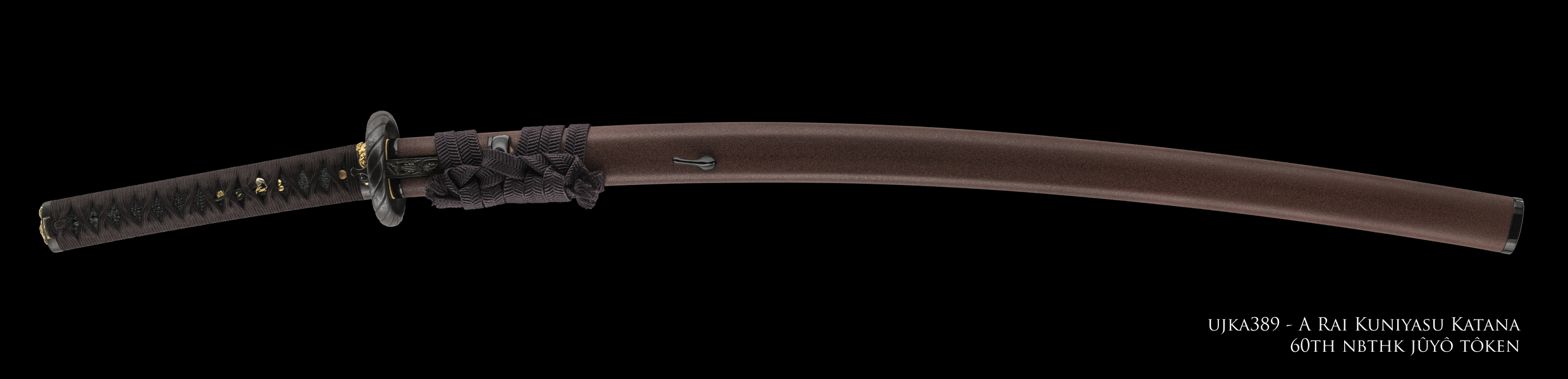
Most people assume that a completed Japanese sword was made by a single swordsmith. It was not. The blade itself is the swordsmith’s work – but everything else that makes up a finished sword in full koshirae is the work of separate, highly specialised craftsmen, each dedicating their life to one particular discipline.
A completed Japanese sword typically involves:
| Swordsmith | Produces the blade with help from apprentices |
| Polisher (togishi) | Brings out the full beauty of the steel – equal in importance to the smith |
| Habaki maker | The collar that secures the blade in the shirasaya |
| Shirasaya maker | The plain magnolia storage scabbard |
| Horimono carver | Blade engravings, if present |
| Tsuba maker | The guard – often a lifetime’s specialisation |
| Fuchi-kashira maker | Collar and pommel metalwork |
| Menuki maker | Decorative grip ornaments beneath the silk wrapping |
| Tsuka maker | The hilt, including ray skin and silk wrapping |
| Saya maker | The lacquered scabbard, sometimes with a separate lacquer artist |
Each craftsman complements the others. Each is striving for perfection in their own narrow discipline, trusting that everyone else in the chain is doing the same. The result, when it all comes together, is an object that no single person could have produced alone. I find that genuinely moving – and it is a model I have tried to follow with Unique Japan and the team we have built over the years.
Reason 6: Surprisingly Accessible
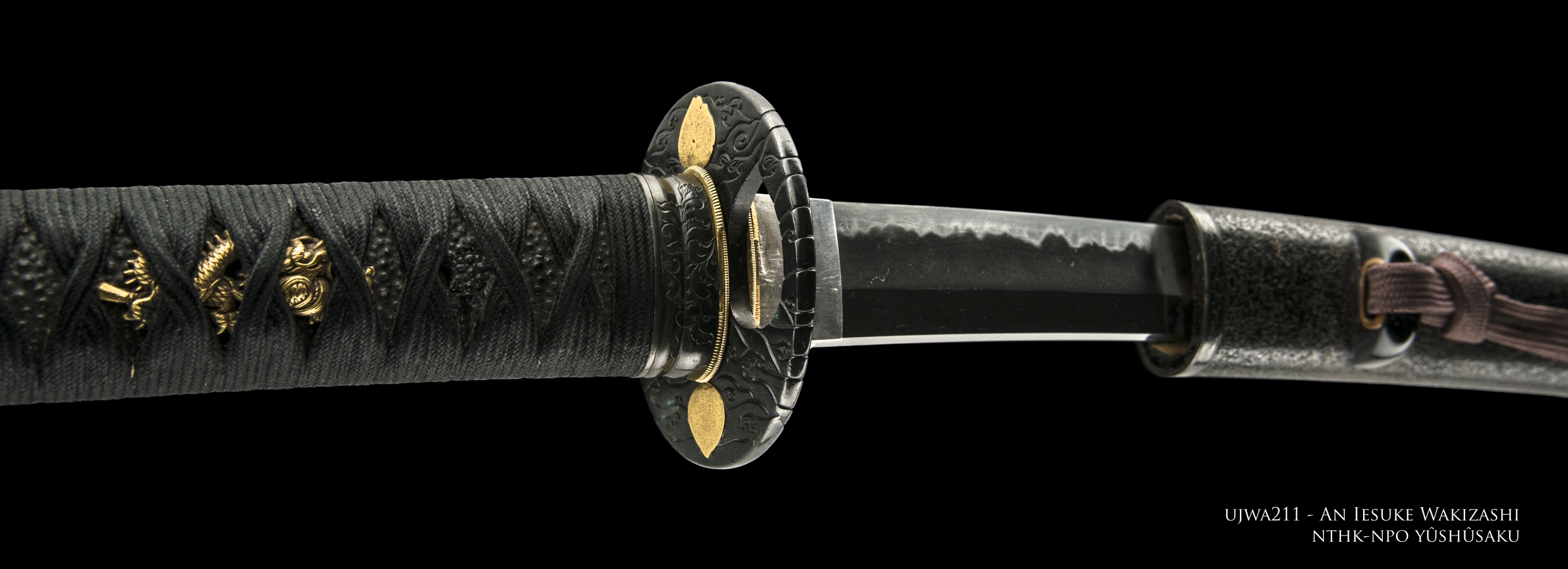
I understand some people may raise an eyebrow at this one. But consider what you are actually acquiring: an object five hundred years old, hand-forged by a master craftsman using techniques refined over a millennium, accompanied by certificates from Japan’s most respected academic body, in generally excellent condition, with a documented history and a provenance that makes every European antique dealer I have ever met slightly envious.
At Unique Japan, a solid certified Hozon piece starts at around $5,000-$10,000. Our Tokubetsu Hozon range typically sits between $10,000 and $25,000. Jûyô Tôken swords start at around $25,000. Even at the very top end – a Tokubetsu Jûyô Tôken sword at $150,000 or $200,000 – compare that to what a significant European painting commands at auction. The Japanese sword, arguably the pinnacle of Japanese craftsmanship and cultural heritage, remains genuinely undervalued by the global art market. That is not going to last.
In my opinion it is only a matter of time before the broader art collecting world discovers nihontô in the way it has discovered Japanese ceramics and woodblock prints. The finest pieces will move accordingly.
Reason 7: Power and Responsibility
I will admit it freely: holding a Japanese sword gives me a sense of power. But it is not a reckless feeling. Quite the opposite. The sword clarifies. It focuses the mind in a way that is difficult to explain until you have experienced it yourself.
There is a concept in samurai culture of personal responsibility – the idea that we alone are accountable for the quality of the life we live. Not our circumstances, not other people, not bad luck. The samurai carried that weight with him everywhere, literally at his side. I think about that every time I pick up a sword.
Owning a Japanese sword has made me more conscious of how I spend my time, more deliberate in my decisions, and more grateful for what I have been able to build. Whether that is the sword’s influence or simply twenty years of growing up, I genuinely cannot tell. But I know the sword has been part of it.
If you have read this far, I suspect you understand what I am talking about. And if you are ready to begin your own Japanese sword journey, we would be honoured to help.
Pablo Kuntz
Founder, Unique Japan
| Further Reading | |
| 7 Points to Consider When Choosing Your Japanese Sword | A practical guide to selecting the right nihontô for your collection |
| 5 Steps to Owning a Japanese Sword | How the purchase and export process works from start to finish |
| Available Swords | Current inventory with full PDF descriptions |
| Custom Koshirae | Examples of koshirae projects completed by Unique Japan |