
ITEM# UJWA193 – Sold
A Tsuda Sukehiro Wakizashi (津田越前守助広)
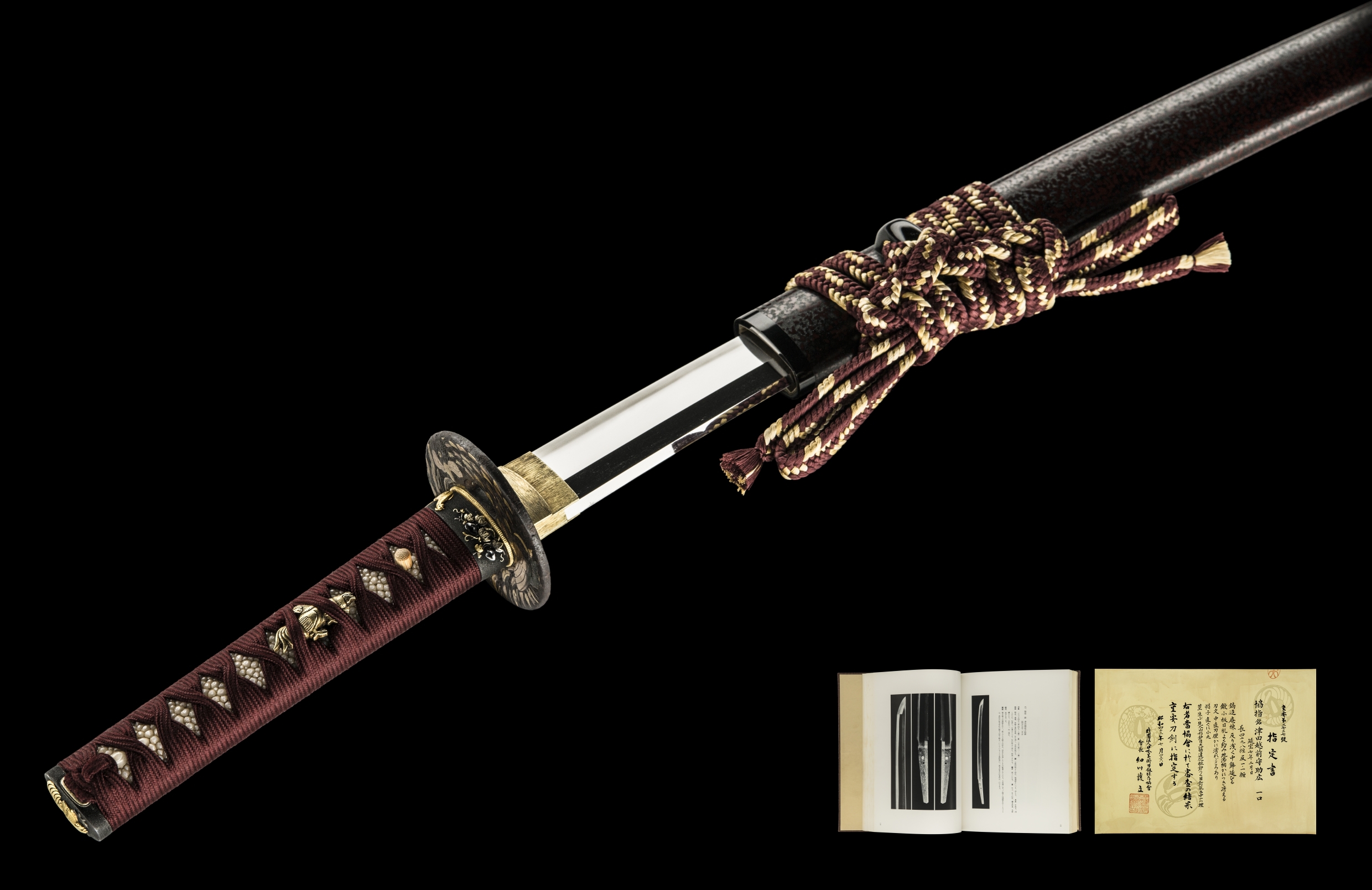
Tsuda Echizen no Kami Sukehiro is widely regarded as the supreme master of the suguha (straight) hamon in the entire Shintô period – and by many accounts the finest swordsmith of the era outright. Born in 1636 in Sesshu province (Osaka) with the given name Jinnojo, he was adopted by the Shodai Sukehiro and eventually surpassed his teacher in every measurable quality. He received the honorary title of Echizen no Kami in 1657 at just 21 years of age – an exceptional distinction – and from 1667 served as retained swordsmith to Aoyama Inaba no Kami Munetoshi, master of Osaka Castle. He died in 1682 at only 46, leaving behind a body of work of extraordinary consistency and brilliance.
This wakizashi is dated to a day during the 2nd month of Enpô 7 (February 1679), placing it firmly in Sukehiro’s celebrated late Maru-Tsuda period – works in which both the omote and ura signatures are executed in flowing grass script, a style adopted from Enpô 2 (1674) onwards. The signature shows Sukehiro’s signature “maru (round) tsuda” style, where the character “da” of Tsuda is written with a distinctively rounded form highly prized by connoisseurs. These late signed works represent the culmination of his career and are among the most collectible of all Osaka Shintô pieces. The blade is featured in the respected Echizen Sukehiro Taikan publication, where it received an award for polishing work performed by Hirai Takamori.
The jihada is a superbly worked ko-itame with sharp, pervasive ji-nie, producing the icy, luminous steel surface that defines the Tsuda school at its best. The hamon is a naka-suguha of exceptional quality, rich with sunagashi and a deep, bright nioi-guchi – precisely the type for which Sukehiro staked his reputation. A custom koshirae with a unified rooster theme was crafted especially for the sword, featuring a striking Heianjo-zogan tsuba attributed to a late generation of the Yoshiro school, gold and shakudo rooster menuki, and rich dark-red tsuka-ito over same. In Japanese tradition, the rooster symbolises courage and honesty – qualities as fitting for the sword as for its maker.
| Item Number | UJWA193 |
| Sword Type | Wakizashi |
| Swordsmith | Tsuda Echizen no Kami Sukehiro (2nd generation) |
| Swordsmith (JP) | 津田越前守助広 |
| Signature | Tsuda Echizen no Kami Sukehiro |
| Date | Enpô 7 (1679), 2nd month |
| School | Tsuda / Osaka Shintô |
| Province | Settsu (Osaka) |
| Period | Shintô – Late Edo period (Enpô era: 1673-1681) |
| Nagasa | 49.8cm |
| Sori | 1.1cm |
| Moto-haba | 3.0cm |
| Nakago | Ubu, 16.3cm, 1 mekugi-ana |
| Jihada | Ko-itame hada with sharp ji-nie |
| Hamon | Naka-suguha with sunagashi and deep nioi-guchi |
| Certificates | NBTHK Juyo Token (17th session) |
| Fujishiro Rank | Saijo-saku (grandmaster) |
| Sharpness Rating | O-Wazamono (exceptionally sharp) |
| Sayagaki | Tanobe Michihiro – designated Juyo Token, dated Showa 43 (1968); sayagaki dated Jizai Heishin Chogetsu (November 2016), signed Tanzan-sensei Hendoushiki with kaou |
| Koshirae | Custom rooster-theme koshirae: dark red-lacquer saya with stone/bark texture, dark red tsuka-ito over same, rooster menuki and fittings throughout |
| Tsuba | Rooster design, mid-Edo (1700s), attributed to late generation Yoshiro, Heianjo-zogan school; high relief gold inlay with mon sukashi; ex-collection Edward Wrangham OBE; NTHK-NPO Kanteisho certified |
| Fuchi-kashira | Rooster and hen theme, shakudo ground with gold details; NTHK-NPO Kanteisho certified |
| Menuki | Gold rooster and hen |
| Habaki | Gold-washed single habaki |
| Publication | Echizen Sukehiro Taikan (polishing award, Hirai Takamori) |
| Status | Sold |
| Includes | NBTHK Juyo Token certificate, NTHK-NPO Kanteisho certificates (tsuba and fuchi-kashira), shirasaya, koshirae, Echizen Sukehiro Taikan publication |