
ITEM# UJKA214 – Sold
A Hatakeda Mitsumori Katana (畠田光守)
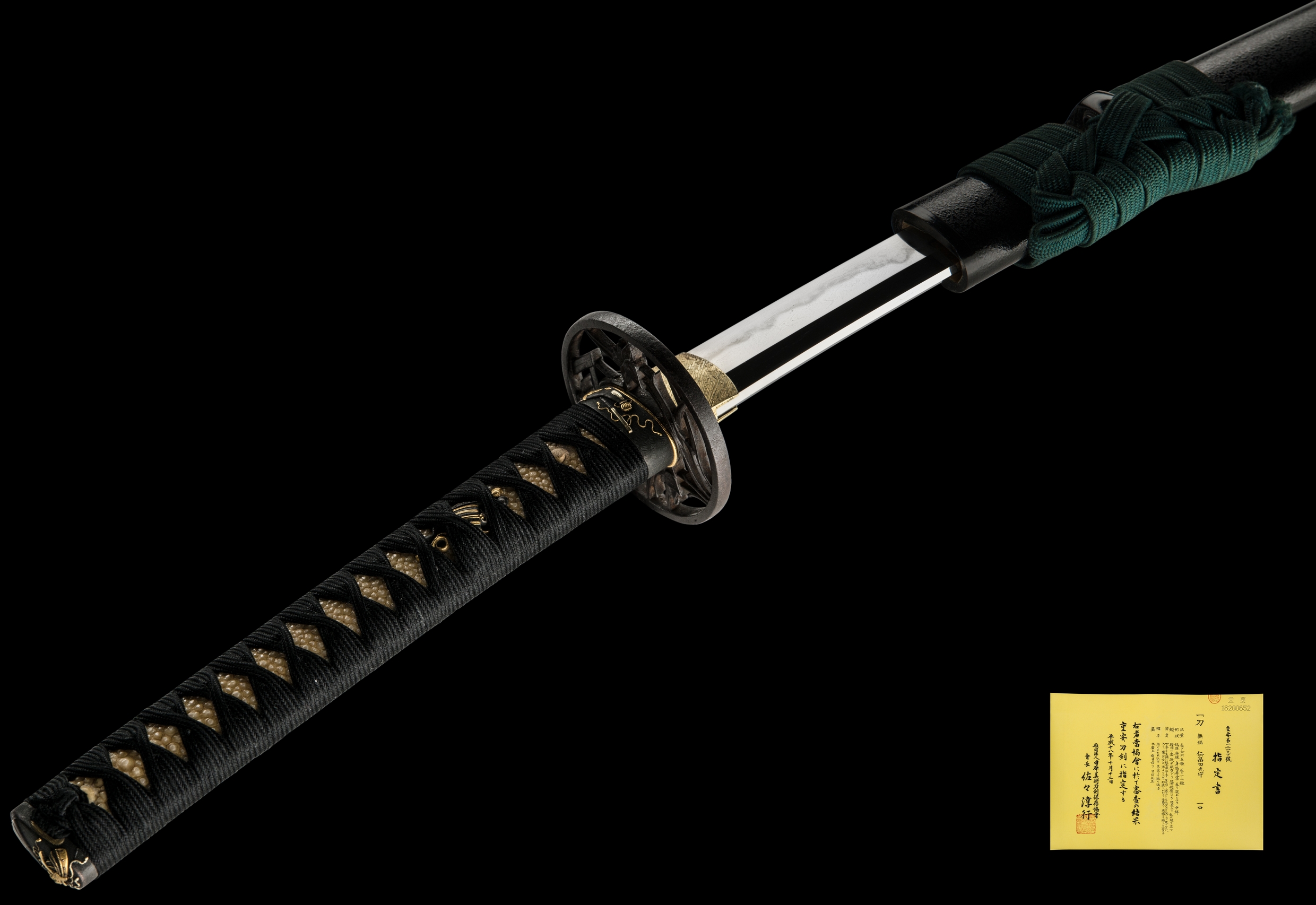
Hatakeda Mitsumori was one of the great masters of the Kamakura period, working from Hatakeda village in Bizen province and counted among the finest smiths of his era. The Hatakeda school was a leading force in Bizen swordsmanship during the late Kamakura period, and Mitsumori – ranked jojo-saku, highly superior, by Fujishiro – was its most celebrated name. Swords by Mitsumori were prized by daimyo families across the centuries, including the Horita and Akimoto clans, and surviving examples are exceptionally rare.
This graceful katana displays everything one expects of a jojo-saku Kamakura blade: a dense ko-itame and mokume-hada (circular burl grain) packed with shining ji-nie and plentiful chikei, and a brilliant gunome choji midare hamon with kawazu-no-ko-choji – the distinctive frog-spawn shaped choji – accompanied by vivid midare utsuri that lights up the ji. Sunagashi, tobiyaki, and kinsuji add further depth to an already rich blade. The Juyo Token certificate, issued at the 52nd session, confirms the attribution with confidence, and the sayagaki by Tanobe sensei reinforces it in full. Originally a long tachi, the blade has been shortened (o-suriage mumei) at some point in its long life – a common fate for Kamakura-period tachi passed across generations.
The sword comes in a sophisticated late Edo-period koshirae with samurai armour elements running through the fittings. The tsuba is a polished iron piece attributed to Kawaharu Tomochika of the Choshu school, depicting the celebrated yatsuhashi (eight bridges) motif with Japanese irises. The fuchi-kashira are attributed to the Yoshioka school, depicting a riding whip with arrow and quiver – a fine evocation of mounted samurai life. A kozuka (utility knife) with horse design speaks to a time when this sword was carried on horseback.
| Item Number | UJKA214 |
| Sword Type | Katana (shortened from tachi) |
| Attribution | Attributed to Hatakeda Mitsumori (mumei) |
| School | Hatakeda, Bizen |
| Province | Bizen |
| Period | Koto – Late Kamakura period (Koan era: 1278-1288) |
| Nagasa | 66.5 cm |
| Sori | 1.8 cm |
| Moto-haba | 2.9 cm |
| Weight | 675 g |
| Nakago | O-suriage mumei, 21.8 cm, 3 mekugi-ana |
| Jihada | Ko-itame and mokume, shining ji-nie and plentiful chikei |
| Hamon | Gunome choji midare, kawazu-no-ko-choji with midare utsuri, sunagashi, tobiyaki, kinsuji |
| Boshi | Undulating notare-komi, running out in yakitsume fashion |
| Certificates | NBTHK Juyo Token (52nd session) |
| Fujishiro Rank | Jojo-saku |
| Sayagaki | Tanobe Michihiro – Bizen no Kuni Hatakeda Mitsumori, o-suriage mumei, designated 52nd Juyo Token, dated Heisei 28 (June 2016) |
| Koshirae | Late Edo-period koshirae with samurai armour theme; black lacquer saya; black silk tsuka-ito over same; green sageo |
| Tsuba | Choshu school, Kawaharu Tomochika – yatsuhashi (eight bridges) with irises, polished iron, late Edo period |
| Fuchi-kashira | Yoshioka school – riding whip, arrow and quiver motif; gold and shakudo |
| Menuki | Samurai sode (shoulder armour) motif |
| Status | Sold |
| Includes | NBTHK Juyo Token certificate (52nd session); Juyo Token white paper (oshigata); koshirae with kozuka; shirasaya; original torokusho (sword registration certificate, Showa 26/1951) |