
ITEM# UJKA138 – Sold
A Yamato Shizu Katana (大和志津)
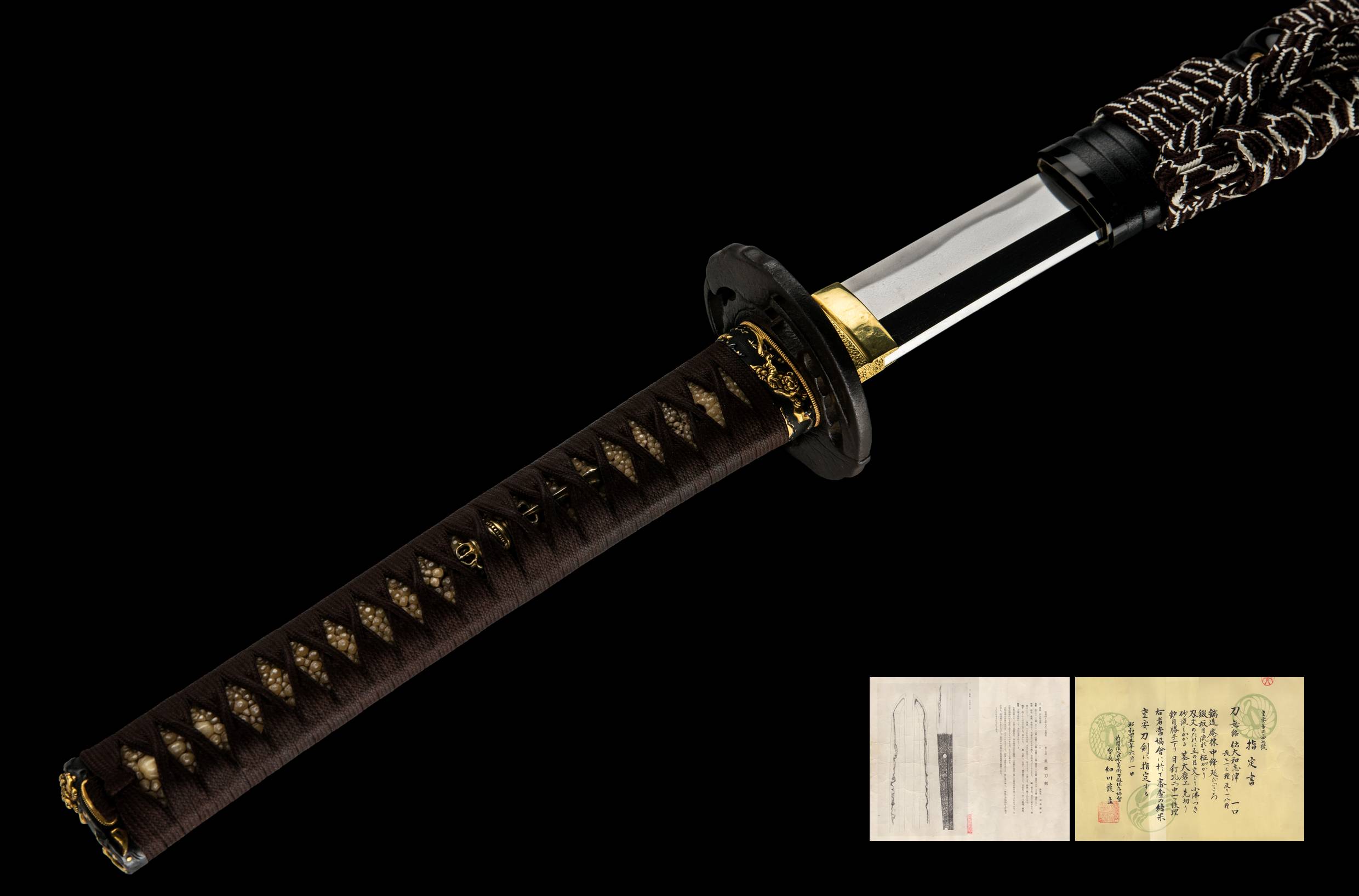
The attribution to Yamato Shizu places this blade at a singular moment in Japanese sword history. The name refers to the early working period of Shizu Saburô Kaneuji – before he left Yamato province to study under Masamune in Sagami – when his blades still showed the classical Yamato-den character in both construction and spirit. The jihada retains the itame and masame mixture of the Yamato tradition; the vivid, energetic hamon already hints at the broader gunome and nie activity that would define his mature synthesis of Yamato and Sôshû methods. These early works occupy a rare position: they belong unmistakably to one tradition while pointing toward another.
The blade is ô-suriage mumei – greatly shortened, with any original signature removed in the process. Despite this, the fundamental quality is immediately apparent: a broad mihaba and strong sori preserve the powerful late Kamakura sugata, the itame and masame-gakari jihada is vigorous and clear, and the notare-based hamon with gunome and plentiful sunagashi has the vivid, bright quality the Yamato Shizu school is known for. The NBTHK designated it Jûyô Tôken at the 19th session on June 1, 1970 – cert no. 3247. The shirasaya carries a sayagaki by Satô Kanzan (佐藤寒山), one of the most respected sword scholars of the twentieth century.
The sword is fitted in a custom koshirae assembled by Unique Japan and certified authentic by the NTHK-NPO in 2015. The Edo period iron tsuba features a sukashi butterbur leaf (fuki-no-ha) design with hairline engraving; the shakudô fuchikashira bear lion (shishi) motifs in high relief with damascening; the menuki depict a sankozuka-ken with Fudô-myô iconography. The hilt is wrapped in brown ito with a hishi-maki rhombus pattern over white ray skin. The black kawari-nuri saya was newly crafted for this mounting.
| Item Number | UJKA138 |
| Sword Type | Katana |
| Attribution | Yamato Shizu (mumei) |
| Province | Yamato |
| Period | Kotô – Late Kamakura period |
| Nagasa | 71.3cm (ô-suriage) |
| Sori | 1.8cm |
| Moto-haba | 3.0cm |
| Nakago | Ô-suriage mumei, katte-kudari yasurime, two mekugi-ana, saki-kiri |
| Jihada | Itame and masame-gakari |
| Hamon | Notare ni gunome with sunagashi |
| Boshi | Saki-komaru with hakikake |
| Certificates | NBTHK Jûyô Tôken (19th session, 1970) – Certificate No. 3247; NTHK-NPO Certificate of Designation – koshirae (No. 6430, 2015) |
| Sayagaki | Satô Kanzan – Yamato Shizu attribution (full translation pending) |
| Koshirae | Kuro kawari-nuri saya uchigatana-koshirae; custom assembly by Unique Japan; NTHK-NPO certified authentic (2015) |
| Tsuba | Iron (tetsu), polished ground, sukashi fuki-no-ha (butterbur leaf) design, hairline engraving; Edo period |
| Fuchi-kashira | Shakudô, nanako-ji, takabori, shikie, zogan; shishi (lion) design; Edo period |
| Menuki | Katachibori, shikie; sankozuka-ken and Fudô-myô design; Edo period |
| Tsuka | White ray skin (sirasame); brown ito (cha-ito), hishi-maki wrapping |
| Status | Sold |