
ITEM# UJKA404 – Catalogue 41 – Sold
A Koyama Munetsugu Katana (於東都固山宗次作之)
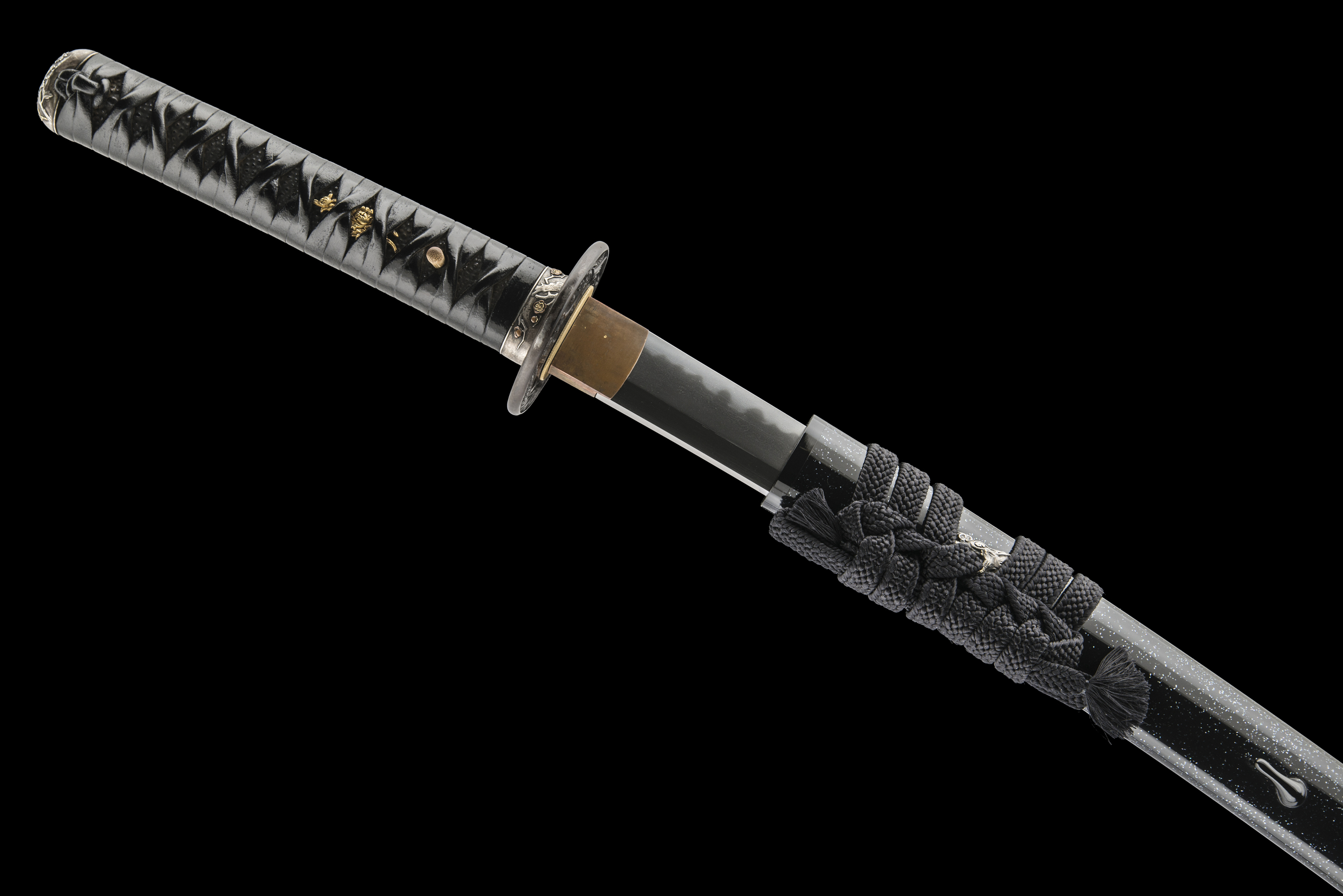
Koyama Munetsugu stands among the great masters of the shinshintô period. Born in the castle town of Shirakawa in Mutsu Province, he served as a retainer to Lord Matsudaira Sadanobu before moving to Edo around 1830, where he spent the remainder of his career under the patronage of the ruling Ise clan. His teacher in Edo was the distinguished Koto Tsunahide, and Fujishiro ranks him jôjô-saku – a highly superior swordsmith – placing him in the uppermost tier of his era.
Munetsugu is best known for his Bizen-style chôji hamon in nioi-deki, and this katana is a compelling expression of that tradition. The gunome chôji-midare hamon dances along the blade with real energy – punctuated by tobiyaki scattered across the ji and bold lines of kinsuji tearing through the temper. The boshi is a vivid kaen, burning like a candle tip. The jihada is a flowing nagare-hada, finely worked. At 63.3cm, the blade was deliberately proportioned after the compact, robust katate-uchi swords of the late Muromachi period – a purposeful nod to battlefield practicality within a refined shinshintô context.
The ura of the nakago carries a chiselled tameshigiri inscription recording a cutting test performed at Senju – one of Edo’s principal execution grounds, where an estimated 200,000 condemned were put to death between 1651 and 1873. The test was conducted in the eighth month of Tenpô 11 (1840), the same month the blade was completed: a clean severance through the chest below the armpits and into the earthen mound. Munetsugu had a well-documented working relationship with the master sword tester Yamada Asaemon, and this inscription places the blade firmly within that tradition. The sword is housed in a custom uchigatana-koshirae produced in the modern period – kuro-ro aogai-mijin-nuri lacquerwork with particles of mother-of-pearl that catch the light like a night sky – fitted with antique fuchi-kashira by Tomomitsu of the Hitotsuyanagi school, an Echizen-school iron dragon tsuba, and golden peony menuki on black lacquered samekawa.
| Item Number | UJKA404 |
| Sword Type | Katana |
| Swordsmith | Koyama Munetsugu |
| Swordsmith (JP) | 固山宗次 |
| Signature | Tôto ni oite Koyama Munetsugu kore o tsukuru |
| Date | Tenpô 11, 8th month (1840) |
| Province | Musashi |
| Period | Shinshintô – Late Edo period (Tenpô era: 1830-1844) |
| Nagasa | 63.3cm |
| Sori | 1.30cm |
| Moto-haba | 3.12cm |
| Weight | 785g |
| Nakago | Ubu, sujikai-yasurime, 2 mekugi-ana |
| Jihada | Nagare-hada |
| Hamon | Gunome chôji-midare in nioi-deki, with tobiyaki and kinsuji |
| Boshi | Kaen |
| Certificates | NBTHK Tokubetsu Hozon; NTHK-NPO Kanteisho (koshirae); NTHK-NPO Kanteisho (tsuba, x2) |
| Fujishiro Rank | Jôjô-saku |
| Sayagaki | Shodô calligraphy artist (unnamed in source) — Reiwa 6 (2024) |
| Tameshigiri (JP) | 天保十一年八月日於千住太々土壇拂 |
| Koshirae | Uchigatana-koshirae, kuro-ro aogai-mijin-nuri saya (black lacquer with mother-of-pearl particles), Modern period. NTHK-NPO Kanteisho certified. |
| Tsuba | Polished iron, openwork three-dimensional dragon, Echizen school, Late Edo period (circa 1780-1868). NTHK-NPO Kanteisho certified. |
| Fuchi-kashira | Tomomitsu (Hitotsuyanagi school), oval silver, depicting orchid, bamboo, chrysanthemum and plum. NBTHK Hozon certified. |
| Menuki | Golden peony |
| Tsuka | Deer leather wrap, lacquered black, on black lacquered samekawa |
| Habaki | Antique copper |
| Catalogue | Catalogue 41 |
| Status | Sold |
| Includes | Shirasaya with shodô pre-sayagaki (Reiwa 6, 2024), antique copper habaki, custom uchigatana-koshirae, NBTHK Tokubetsu Hozon certificate, NTHK-NPO Kanteisho certificates (koshirae; two additional tsuba), two custom otoshi tsuba display boxes (Umetada lotus tsuba; dragon-and-tiger tsuba, both NTHK-NPO certified), sword bag |