
ITEM# UJKA218 – Catalogue 26 – Sold
A Tsunashige Tameshigiri Katana (陸奥守藤原綱重)
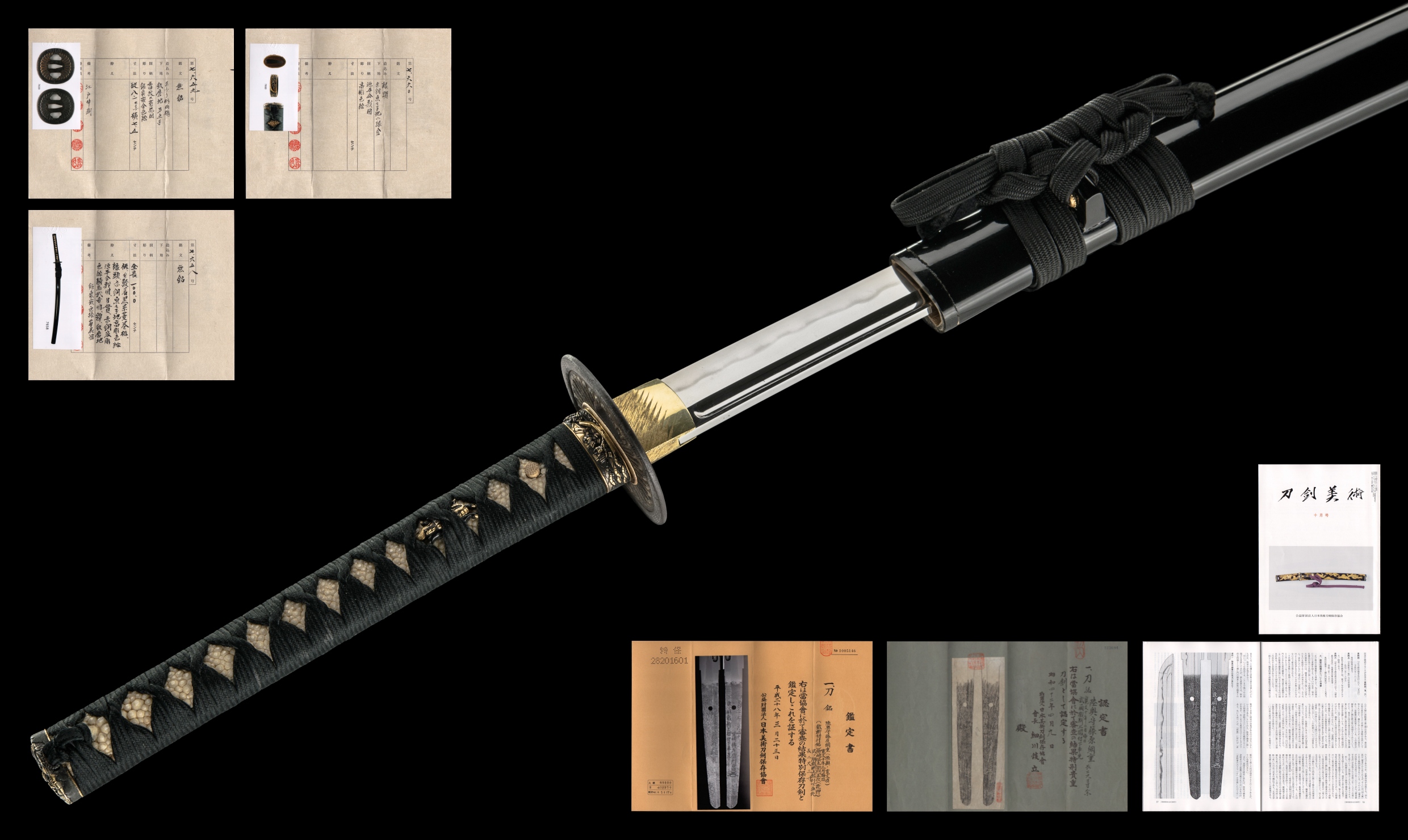
Mutsu no Kami Fujiwara Tsunashige was one of the most capable swordsmiths working in the Edo period, widely regarded as a close successor to the tradition of the great Kotetsu. The NBTHK Token Bijitsu monthly magazine featured this very sword in October 2014 as a study piece, examining the question of whether Tsunashige trained under Tsunahiro – who was himself a teacher of Kotetsu – and how many generations worked under the Tsunashige name. The article concludes that two generations are accepted, though scholars such as Dr. Sato (Kanzan) and Ogasawara-sensei have suggested there may be three. The blades of the two main generations are so closely matched that some experts have argued they are the work of a single hand.
The blade itself is outstanding. The jihada is a fine itame with shirake utsuri – whitish reflective areas that drift across the surface – along with chikei, the dark crystalline lines running through the steel. The hamon is a bright and assertive gunome midare with clear separations between the waves and striking sunagashi, the brushed needle-like passages of nie that are a hallmark of the finest Shintô work. A bo-higroove runs the length of the blade. The nakago is ubu, in saki-haagari kurijiri shape with sujikai file marks and kesho, and retains one mekugi-ana.
In the end of February 1670 this sword was subjected to a cutting test by Shibasaki Den Saemon Masatsugu, who severed two stacked human bodies in a single stroke – cutting the upper body below the rib cage and the lower body above the hipbone. The result, described as futatsu-do setsutan ue-suritsuke shita-kurumasaki, is chiselled onto the reverse of the nakago in full. It is a remarkable document of both the sword’s performance and the era in which it was made. The koshirae is equally compelling: the tsuba is attributed to the 3rd generation Higo School, depicting a kiku (chrysanthemum) in polished iron with gilded petals; the fuchi shows warriors in battle, while the kashira depicts the great sea battle of Dan-no-ura (1185) from the Genpei War, attributed to Mitsunobu of the Mino School. All fittings carry NTHK-NPO Kanteisho certification.
| Item Number | UJKA218 |
| Sword Type | Katana |
| Swordsmith | Mutsu no Kami Tsunashige (1st generation) |
| Swordsmith (JP) | 陸奥守藤原綱重 |
| Signature | Omote: Mutsu no Kami Fujiwara Tsunashige |
| Date | Kanbun 10 (end of February 1670) – tameshigiri inscription |
| Period | Shintô – Early Edo (Kanbun era: 1661-1673) |
| Nagasa | 70.0cm (ubu) |
| Sori | 1.4cm |
| Moto-haba | 3.2cm |
| Weight | 700g |
| Nakago | 21.3cm, saki-haagari kurijiri, sujikai file marks, kesho, 1 mekugi-ana |
| Jihada | Itame (wood grain) with shirake utsuri and chikei |
| Hamon | Gunome midare with sunagashi |
| Boshi | Ko-gunome |
| Tameshigiri (JP) | 寛文十年二月晦日柴崎伝左衛門正次(花押)貮ツ胴截断上摺付下車先 |
| Certificates | NBTHK Tokubetsu Hozon; NBTHK Tokubetsu Kicho (older); NTHK-NPO Kanteisho (tsuba, fuchi-kashira, koshirae) |
| Koshirae | Black lacquer saya, black silk tsuka-ito, same (ray skin) under ito |
| Tsuba | Polished iron, kiku (chrysanthemum) motif with gilded petals, attributed to 3rd generation Higo School, mid-Edo c.1700s; NTHK-NPO Kanteisho |
| Fuchi-kashira | Fuchi: Genpei War battle scene; Kashira: Dan-no-ura sea battle, attributed to Mitsunobu, Mino School, late Edo; NTHK-NPO Kanteisho |
| Habaki | Koshi Yujo Yasuri-habaki (brass) |
| Catalogue | Catalogue 26 |
| Status | Sold |
| Includes | Shirasaya, koshirae, carry bags, sword stand, maintenance kit, DVD, booklet, printed description, NBTHK Token Bijitsu Monthly Journal (October 2014) |