
ITEM# UJKA422 – Catalogue 40 – Sold
A Nidai Tadakuni Katana (肥前住播磨守藤原忠国)
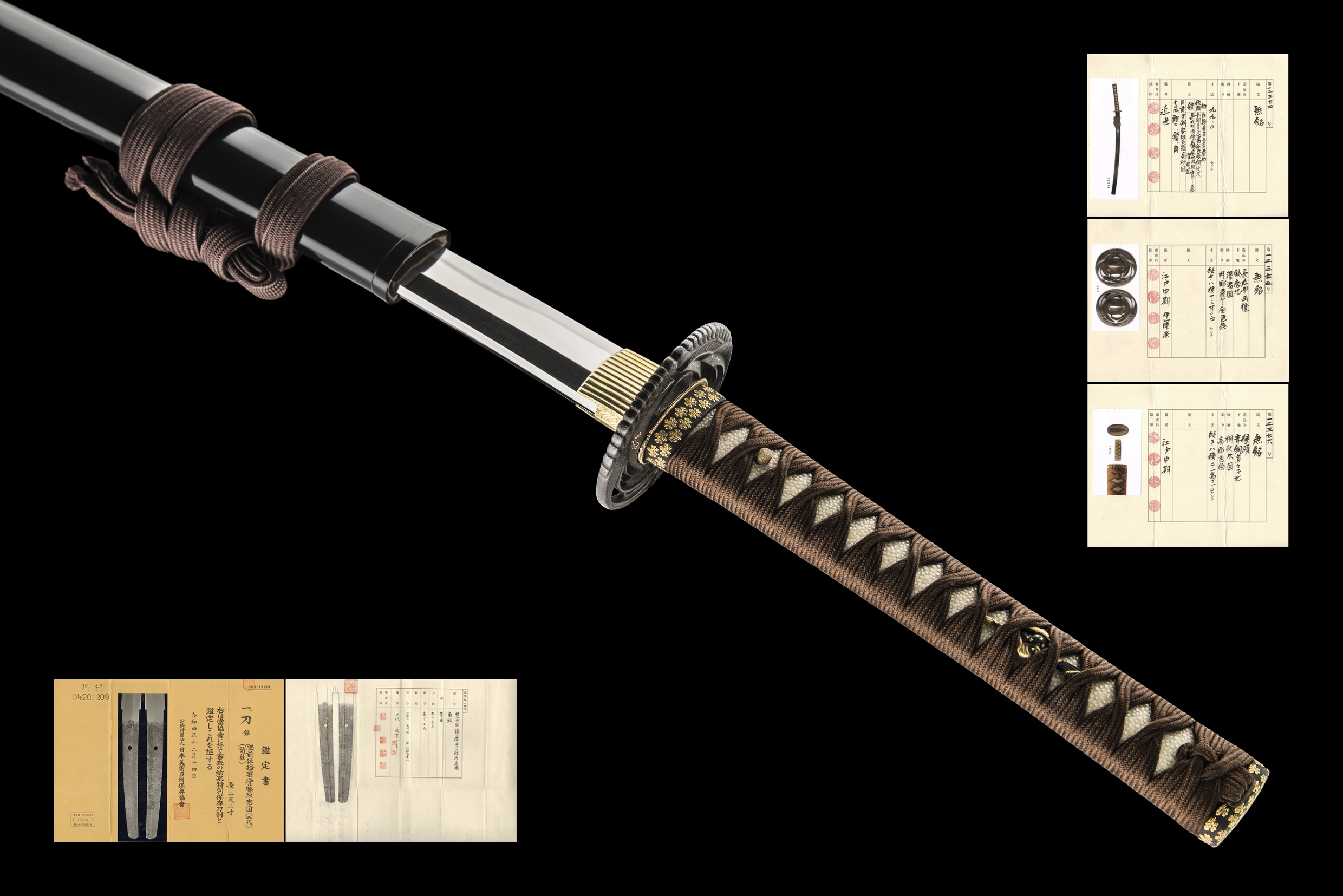
This handsome katana was forged by nidai (second generation) Tadakuni of Hizen province. Born Hashimoto Danzaemon, he apprenticed under his father shodai Tadakuni, who had himself trained under the grandmaster swordsmith shodai Tadayoshi. He first signed under the name Harukuni, then stepped up to Tadakuni after his father retired. During the Tenna era (1681-1684) he bore the prestigious honorary title Harima no Kami – Lord of Harima province – and it is this signature that graces the nakago of this sword. A subtle yet significant key to identifying generational work: shodai signed the radical “Hi” of Hizen with one chisel stroke, while nidai signed it with two.
What makes this katana particularly collectible is its hamon. The overwhelming majority of Hizen-to carry either suguha or gunome with choji variations – here, nidai Tadakuni has produced a gorgeous, bright notare hamon that flows along the blade with elegance and grace, wrought in nie-deki consistent with the finest Hizen tradition. The steel itself is quintessentially Hizen: a tightly forged ko-mokume that resolves into the fine, rice-grain texture known as konuka-hada. On the ura side of the ubu nakago sits a crisp 16-petal kiku-mon – a mark of Imperial permission granted via the Mishima family of Kyoto, who served as liaison between the sword world and the Imperial court.
The koshirae is a classy uchigatana-koshirae lacquered in glossy black, crafted during the Modern period. Its polished omodaka (three-leaf arrowhead) tsuba is attributed to Masafusa of the Ito school, Mid-Edo period. The fuchi-kashira, attributed to the prized Yoshioka school (1700-1780), is decorated with kiri-mon paulownia designs in gold on shakudo-nanako. The menuki depict a scene from the beloved Noh play Takasago, which speaks to the virtues of a loving and long-married couple. Nidai Tadakuni is ranked chûjo-saku – above average – and rated wazamono for the sharpness of his blades.
| Item Number | UJKA422 |
| Sword Type | Katana |
| Swordsmith | Harima no Kami Tadakuni (2nd gen.) |
| Swordsmith (JP) | 播磨守忠国(二代) |
| Signature | Hizen jû Harima no Kami Fujiwara Tadakuni (nidai) |
| School | Hizen |
| Province | Hizen |
| Period | Shinto – Early Edo period (Tenna era: 1681-1684) |
| Nagasa | 69.7cm |
| Sori | 1.8cm |
| Moto-haba | 3.07cm |
| Weight | 720g |
| Nakago | Ubu, sujikai-yasurime (diagonal file marks), 1 mekugi-ana, kiku-mon on ura |
| Jihada | Ko-mokume-hada leading to konuka-hada |
| Hamon | Bright notare-ba in nie-deki |
| Boshi | Notare, ko-maru |
| Certificates | NBTHK Tokubetsu Hozon; NTHK-NPO Kanteisho (sword, koshirae, tsuba, fuchi-kashira – certified as Authentic) |
| Fujishiro Rank | Chûjo-saku (above average swordsmith) |
| Sharpness Rating | Wazamono (maker of good sharp swords) |
| Koshirae | Kuro-roiro-nuri saya uchigatana-koshirae – lacquered in glossy black, Modern period |
| Tsuba | Omodaka (three-leaf arrowhead) design, attributed to Masafusa, Ito school, Mid-Edo period (1700s) – NTHK-NPO certified |
| Fuchi-kashira | Kiri-mon (paulownia) in gold on shakudo-nanako, attributed to Yoshioka school (1700-1780) – NTHK-NPO certified |
| Menuki | Noh play Takasago motif |
| Habaki | Gold-wrapped with vertical channels |
| Catalogue | Catalogue 40 |
| Status | Sold |
| Includes | Shirasaya, koshirae, fabric bags, stand, kit, printed description |