
ITEM# UJKA491 – Catalogue 46 – Sold
A Koyama Munehira Katana (固山宗平)
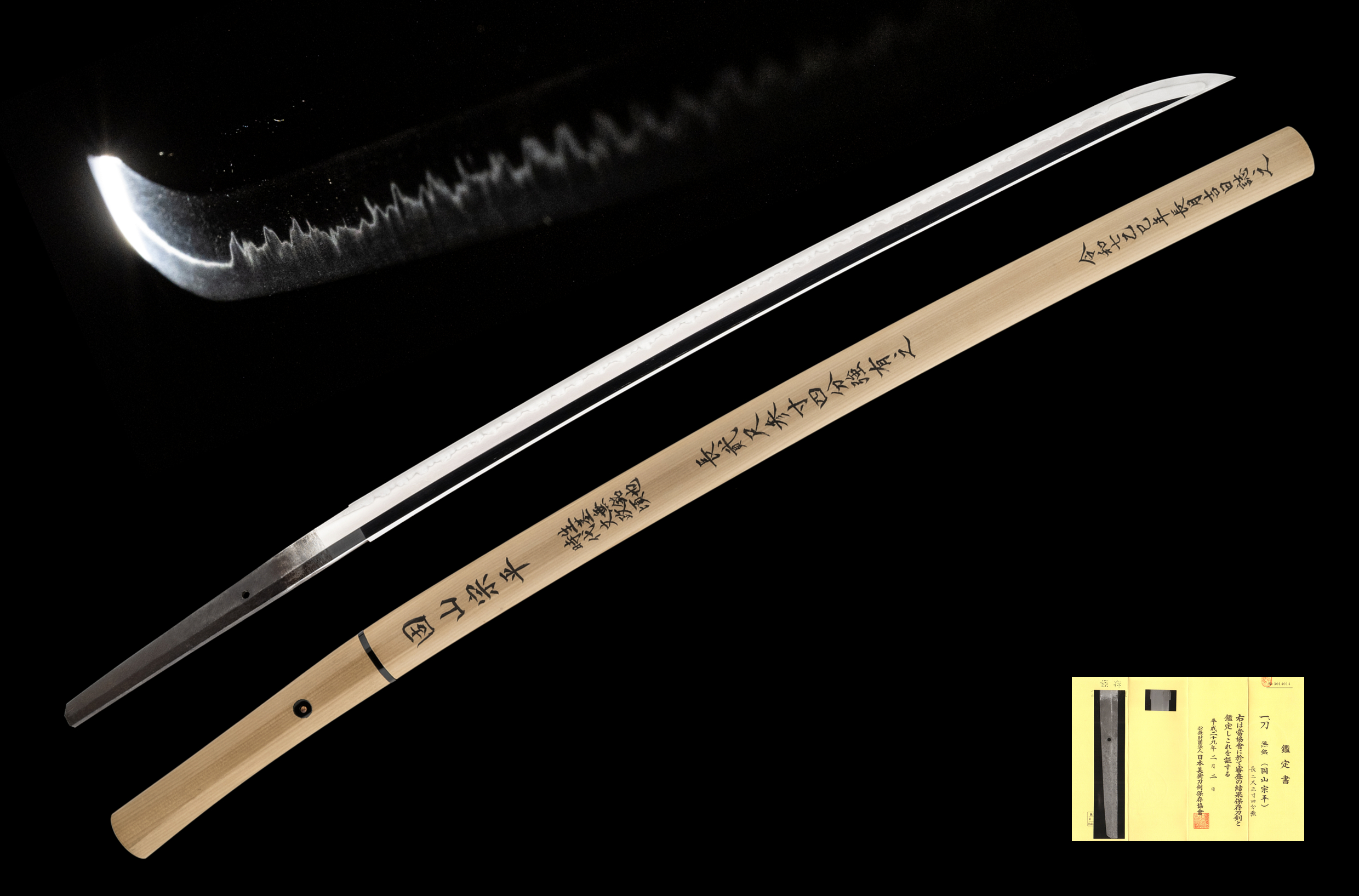
Koyama Munehira (固山宗平) was born in Shirakawa, Mutsu province during the Kyôwa era (1801~1804), his given art name being Hakuryûshi (白竜子). He came from a remarkable swordsmithing family – his younger brothers were Munetoshi (宗俊) and the celebrated Koyama Munetsugu (宗次), rated jôjô-saku and widely regarded as one of the finest smiths of the entire shinshintô period. Although Munehira is traditionally said to have trained under Katô Tsunahide, his style shows closer affinity with Tsunahide’s younger brother Chôunsai Tsunatoshi, from whom he absorbed the flamboyant Bizen-tradition approach that became his hallmark. He initially worked in Shirakawa, then relocated to Kuwana in 1823 when the Matsudaira lords of Shirakawa were transferred there. Later he served the Doi family of the Koga domain in Shimousa, before returning to Matsudaira service. He died in Edo around 1843 and is rated chûjô-saku – upper middle grade – among shinshintô smiths, with some of his finest works considered equal to those of his famous younger brother.
This katana is a bold, physical object that makes an immediate impression. Its shape was deliberately inspired by the great battlefield swords of the mid-1300s Nambokuchô period – at 71.0 cm with a gentle 1.0 cm curvature and weighing a substantial 930g, it carries real presence in the hand. The ô-kissaki measures an imposing 7.77 cm, lending the blade a distinctly martial, almost threatening silhouette. The nakago is ubu and unsigned, with sujikai-yasurime (slanting file marks) and an unusual katasogi tip – the tang slopes asymmetrically on the ha side only, a rare configuration closely associated with smiths from the Kaga region and documented on at least one other known Munehira work. The steel shows a well-forged mix of itame and mokume-hada with thick ji-nie, channels of chikei, and a light midare-utsuri drifting across the ji – a refined Bizen-tradition feature seldom seen in shinshintô work.
Finished in a sashikomi polish rather than the more common hadori, the blade rewards extended study under a good light. The sashikomi treatment provides a more classical, translucent window into the steel, allowing both the jihada and the hamon to reveal their full character without artificial enhancement. The hamon itself is a dynamic gunome-chôji-midare with a bright nioiguchi and a rich supporting cast – long ashi, kinsuji, sunagashi, tobiyaki, and jewel-like tama. The sayagaki on the shirasaya was inscribed by Nozomi-san (shodô artist) in September 2025, attributing the blade to Koyama Munehira and dating it to the Bunsei period. This is a sword for the serious student of nihontô who wants to spend long, quiet hours under the light with something genuinely exceptional.
| Item Number | UJKA491 |
| Sword Type | Katana |
| Swordsmith | Attributed to Koyama Munehira (mumei) |
| School | Bizen tradition (Shinshintô) |
| Province | Iwashiro (Mutsu) |
| Period | Shinshintô – Late Edo period (Bunsei era: 1818~1830) |
| Nagasa | 71.0 cm |
| Sori | 1.0 cm |
| Moto-haba | 2.93 cm |
| Saki-haba | 2.33 cm |
| Kissaki | 7.77 cm (ô-kissaki) |
| Moto-kasane | 7.1 mm |
| Saki-kasane | 5.6 mm |
| Nakago | 24.7 cm |
| Weight | 930 g |
| Nakago | Ubu mumei; machiokuri-nakago (slightly raised tang); sujikai-yasurime (slanting file marks); rare katasogi tip (asymmetrical slope on ha side); 1 mekugi-ana |
| Jihada | Well-forged mix of mokume and itame-hada; thick ji-nie; chikei; light midare-utsuri |
| Hamon | Gunome-chôji-midare in sashikomi polish; bright nioiguchi; long ashi; kinsuji, tobiyaki, tama, sunagashi |
| Certificates | NBTHK Hozon (Heisei 29 / 2017, February 2nd) |
| Fujishiro Rank | Chûjô-saku |
| Sayagaki | Nozomi-san (shodô artist) – Koyama Munehira, ubu mumei, Bunsei period (1818~1830), blade length ~71.0cm; dated September 2025 (Reiwa 7, year of the Snake, lucky day) |
| Habaki | Two-toned silver habaki |
| Status | Sold |
| Catalogue | Catalogue 46 |
| Includes | Shirasaya, fabric bag, stand, kit, printed description |